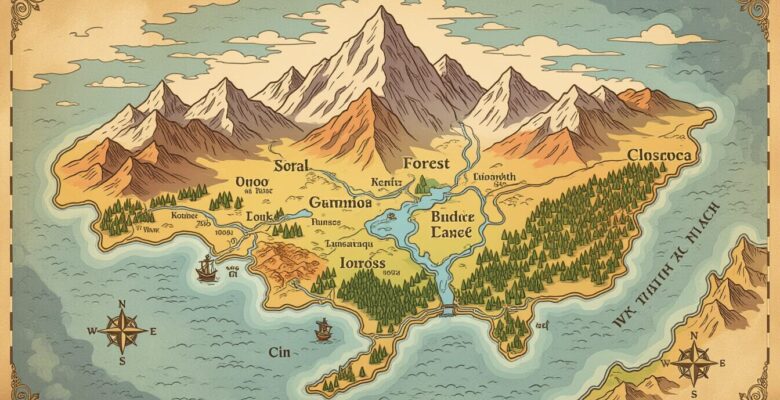
In tabletop roleplaying games, maps are more than just illustrations—they’re storytelling tools that shape exploration, adventure, and immersion. From sprawling world maps charting continents and kingdoms to intricate dungeon blueprints where every torch-lit corridor hides danger, good cartography helps bring imagination to life. Today’s Game Masters have a wealth of digital tools to choose from, each catering to different artistic skills, campaign styles, and budgets. Some TTRPG Map Making Softwares emphasize realism and polish, others focus on speed or procedural generation, and many bridge the gap between creativity and convenience.
This guide reviews fifteen of the most prominent map-making programs available to TTRPG creators, examining their strengths, weaknesses, and best use cases. Whether you’re a veteran worldbuilder designing an epic campaign setting or a first-time DM sketching the next dungeon crawl, one of these tools will fit your creative vision.
Inkarnate
Inkarnate is a browser-based, asset-heavy map editor aimed at fantasy world-builders who want attractive overland, regional, city, and simple battlemaps without a steep learning curve. Its interface is visual and tile/brush driven: you paint terrain, drop stamps (trees, buildings, icons), and tweak styles with filters and layered effects. The gallery/community and built-in templates let newcomers produce polished-looking maps quickly; its stamp library covers everything from coastlines and mountains to buildings, docks and iconography.
Strengths: rapid results, huge asset library, frequent updates and community map gallery. The free tier is generous for occasional use; Pro unlocks higher export resolutions, additional assets and commercial use. Inkarnate is particularly suited to creators who want a polished “storybook” look for kingdom maps, region maps for campaigns, and illustrated city maps.
Limitations: being browser-centric, it’s not the best place for pixel-perfect tactical battlemaps (no tile-snap grid as sophisticated as some battlemappers), and pro features follow a subscription model that some users find changing over time. For multi-level dungeons or tactical VTT integration you may prefer a dedicated battlemapping tool — but for worldbuilding and artful maps it’s one of the quickest ways to get professional results.
Wonderdraft
Wonderdraft is a lightweight desktop application (Windows / macOS / Linux) that focuses on beautiful overland and region maps with an emphasis on cartographic style. It’s a one-time purchase tool (no subscription), and its main selling point is speed and artistic control: brush-based terrain painting, custom stamp sets, layered labels, and powerful coastline/river tools. Users can design convincing mountain ranges, river systems, forests and political boundaries with relatively few clicks.
Strengths: intuitive UI for creating fantasy maps with a classic cartography aesthetic, robust customization (fonts, palette, stamp import), and a one-time cost that makes it appealing for hobbyists wanting long-term ownership. There’s also a thriving ecosystem of community-made asset packs (stamps, brushes, palettes).
Limitations: Wonderdraft is geared to region/world scale and not optimized for tactical encounter maps (no built-in lighting/fow or grid focus like battlemappers). Also, because it’s desktop-only, collaborative cloud editing is not native. For a world/kingdom map (mountains, rivers, cavern entrance markers) it’s an excellent, economical choice.
Dungeondraft
Dungeondraft is a desktop tool purpose-built for dungeon and interior battlemaps. It brings a polished art pipeline (smart tiling, scatter tools, paintable textures) and a built-in lighting system for atmosphere. The workflow centers on building rooms and corridors fast with reusable assets and smart walls that tile correctly; it also offers cave and dungeon generators to create starting layouts you can tweak.
Strengths: tailored toward tactical maps (looted caverns, mine shafts, interior river chambers), large user asset integrations, export options suitable for VTTs and printable maps, and a one-time purchase model. The UI aims to be approachable while still giving control over layering, object tagging, and print-friendly exports.
Limitations: less focused on overland/world maps; asset libraries can be an additional cost if you want hand-drawn themed packs (though community packs are plentiful). If your sessions often involve cavern exploration, ambushes along the river inside the mountain, or multi-level mining tunnels, Dungeondraft is one of the most efficient ways to make attractive battlemaps quickly.
Arkenforge (Map Builder / Toolkit)
Arkenforge markets itself as a combination map builder + “in-person” VTT toolkit with a focus on animated maps and presentation. It’s desktop software sold as a one-time purchase with optional content packs. The editor supports layered assets, animated elements, and an integrated “player display” mode so you can push a map to a TV/second screen for in-room play. Arkenforge also emphasizes modular assets, audio ambience and export to popular VTTs.
Strengths: excellent for GMs who run hybrid or in-person games and want animated atmospheres (waterflow, ambient particles), an integrated audio system, and easy exports for digital or print play. The store bundles give you quick access to themed asset sets (fantasy, sci-fi). One-time purchases and bundle promotions are common.
Limitations: the tool is heavier and more feature-dense than simple battlemappers — there’s a modest learning curve. If you only need static maps, simpler programs will be faster; Arkenforge shines when you want presentation polish (animated water, lighting) and an audience display option.
MapForge
MapForge is a veteran battlemap & hex/iso map creator that grew out of crowdfunding and community assets. It focuses on tactical battlemaps, hex maps and isometric views, and its add-on manager and asset marketplace let you build genre-appropriate maps quickly. It’s useful for GMs who need hex travel maps, compact tactical scenes, or printable battlemaps with robust tile-based libraries.
Strengths: large and varied asset library (many officially licensed and third-party packs), support for hex and isometric styles, and export options for high-resolution print or VTT use. The development has continued via updates and an add-on manager that simplifies content selection.
Limitations: the UI is functional rather than glamorous and the initial setup (assets/add-ons) can feel fiddly. MapForge rewards patience and asset investment — when you want a hex-crawl map or a stylized, printable battlemap with modular tiles, it still performs well.
Dungeon Scrawl
Dungeon Scrawl is a free browser-based sketching tool focused on rapid dungeon layouts. It’s intentionally minimalist: draw walls, doors and simple furniture quickly, then export PNG/PDF for print or virtual tabletops. Dungeon Scrawl works well for GMs who need a quick map in a few minutes (room outlines, caves, encampments) and supports importing data from generator tools (e.g., Watabou’s generators).
Strengths: instant access (no signup required for core functions), uncluttered workflow for fast dungeon design, and a generous free tier; Pro unlocks autosave, commercial use, and some style overlays at a low monthly cost. It’s highly efficient for one-page dungeons, encounter maps, and early prototyping.
Limitations: the visuals are schematic (not hand-painted or asset rich), and it’s not meant for producing cover-art style maps. For session prep, dungeon encounters, or sketching cavern layouts, it’s an unbeatable rapid tool.
Campaign Cartographer 3+ (CC3+)
Campaign Cartographer 3+ (CC3+) from ProFantasy is the high-end, professional mapping package for users who want publication-quality cartography across scales (world → region → city → battle). It’s a Windows program with a vector-based engine, rich macro scripting, and dozens of add-on style packs that reproduce classical cartography and modern fantasy aesthetics. CC3+ has a steeper learning curve but offers control rivaling illustration suites.
Strengths: unparalleled control for fine cartography, a mature ecosystem of style packs, precise vector output for publication, and excellent documentation/tutorials. Professionals and hobbyists who want stylistically consistent maps for printed modules often choose CC3+.
Limitations: the learning curve is real — it’s not plug-and-play. It’s Windows-centric (macOS users usually run it under Wine/VM), and the old-school UI can feel dense. If you plan to publish or desire full vector control over every cartographic element (labels, insets, projection options), CC3+ is the most capable specialist tool.
Worldographer
Worldographer is a focused suite for hex/world/settlement maps with a strong set of auto-generators: world, region, city, village and battlemat generators are built in. It’s designed to produce quickly editable, game-ready hexcrawl maps and settlement layouts with population and building generators for sandbox campaigns.
Strengths: excellent for hexcrawls and high-level sandbox design (quickly generate a world with rivers/coastlines, populate towns, and export battlemats). The software is intentionally prescriptive: it gives tools that help you simulate and plan the game geography rather than sculpting every pixel.
Limitations: aesthetic polish is functional rather than hand-painted, and its niche is hex/strategic mapping rather than artful overland visuals. If your campaign uses hex travel and you need to mark mining claims, river fords and trade routes for your mountain clan, Worldographer speeds that process dramatically.
Dungeon Tile Mapper (Wizards / older tools)
Dungeon Tile Mapper refers to older, simple tile-based editors (originally provided by Wizards of the Coast years ago and maintained in community mirrors). These tools are grid/tile editors: you drag tiles from a set (dungeon floor, wall, furniture) onto a canvas and export a composed map. They’re free, lightweight, and good for quickly assembling modular dungeons.
Strengths: no cost, very simple to learn, and tile collections often include classic D&D-style tiles useful for vaulted halls, shrines, and modular dungeon construction. Great for GMs who prefer tile aesthetics or who want consistent tile-based visuals.
Limitations: dated interface and asset sets; not actively developed like modern commercial tools. If you only need simple modular dungeon layouts and want free resources, these tools still serve well — but for modern VTT nuance (lighting, layers), newer battlemappers are stronger.
Azgaar’s Fantasy Map Generator
Azgaar’s is an open-source browser tool that procedurally generates detailed world maps (biomes, elevation, rivers, political borders, cultures) and gives you deep editing controls. It’s fantastic for rapidly getting a campaign-scale world and then adjusting continents, climates, and civilization spread. The project is actively maintained on GitHub and includes export features (SVG/PNG/JSON) and integration with city generators.
Strengths: free and open source, powerful procedural generation, exports and data-driven editing (great for designers who want the backend data for further tooling). If you need a full world — rivers, mountain chains, biomes — without starting from scratch, Azgaar’s is one of the strongest free options.
Limitations: the generated aesthetic is more “map schematic” than lush, hand-painted art; there’s a modest technical learning curve to use its data exports and advanced features.
Donjon (donjon.bin.sh)
Donjon is a long-running collection of random generators (dungeons, towns, treasure maps, encounter tables) rather than a polished editor. Its dungeon generator and world/town randomizers are extremely handy when you need content fast: produce a dungeon plan, then paste the layout into a sketching tool or Dungeon Scrawl for refinement.
Strengths: instant random generation, extremely low friction and free; includes many niche generators (5e/random, treasure, NPCs), making it an exceptional toolbox for session prep. Use Donjon to seed ideas or create one-page dungeons for play-by-the-seat-of-your-pants sessions.
Limitations: not intended for producing final art — outputs are utilitarian and often need cleaning up in a mapper. Also, because the generator is deterministic if you don’t randomize properly, you may see repeated motifs. For fast dungeon skeletons and encounter maps (e.g., a mine shaft network you’ll later flesh out), Donjon is one of the quickest routes from idea to playable map.
AutoREALM
AutoREALM is a free, open-source Windows program for vector-style map creation (dungeons, cities, castles). It’s older and less polished than modern editors, but because it’s free and vector-capable it can still produce clean, schematic maps suitable for print or further editing. It includes name generators and a symbol library.
Strengths: no cost and vector output make it useful for precise cartography without relying on commercial software. A useful option when you want control of vector elements but don’t need a modern UI.
Limitations: development slowed in the 2000s and the interface shows its age; it’s Windows-centric and lacks many modern conveniences (asset marketplaces, modern export workflows). Use AutoREALM if you want free vector map tooling and don’t mind a retro UI.
Affinity Photo / Adobe Photoshop / GIMP (graphic suites)
These are general image editors rather than dedicated map programs, but they are frequently used to produce highly customized, publication-quality maps. Photoshop (subscription) and Affinity Photo (one-time purchase historically; now evolving) give you complete control over brush engines, textures, layer effects and filters; GIMP is the free open-source alternative. Using these, cartographers hand-paint terrain, create custom brushes for mountains/trees, and compose polished maps.
Strengths: ultimate creative control, best for stylized or high-resolution final art, wide export options and advanced layer/brush systems. Affinity and GIMP are budget-friendly alternatives to Photoshop (Affinity historically one-time purchase; GIMP free).
Limitations: steeper artistic skill required — you’re effectively illustrating rather than assembling. These programs are not specialized for tiles, smart walls, or rapid procedural map generation, so expect longer production time per map.
Clip Studio Paint / Procreate (drawing apps)
Clip Studio Paint and Procreate are digital painting apps often used to hand-draw maps, especially when an artist-crafted aesthetic is desired. Procreate (iPad, one-time purchase) is beloved for brush feel and Apple Pencil support; Clip Studio adds vector features, comic/page tools, and cross-platform support. Both allow custom brushes and texture work that make hand-painted maps sing.
Strengths: extremely natural drawing workflows, great brush libraries, and rapid, tactile iteration (especially on tablets). Procreate’s one-time price and expressive brushes make it attractive for artists; Clip Studio provides advanced layout/animation tools and flexible purchase options.
Limitations: not specialized map editors — you’ll need to build your own stamp/brush system for repeated map objects, and exporting for VTT use takes extra steps.
Tiamat Tile Mapper & GM Friend (honourable mentions)
Tiamat (tile mapper) and GM Friend (free hex-map generator) are simpler, niche tools that remain useful. Tiamat is a tile-based online mapper built around a large tile set (modular tiles you place to form maps). GM Friend is a free, browser hex/hexcrawl editor great for quick sandbox maps and hex-based travel planning. Both are lightweight, low-cost (often free) options for GMs who need fast outputs.
Strengths: immediate, low-cost solutions for tiles/hexes, simple UIs and minimal learning time. Great for sketching hexcrawls, marking resource nodes (e.g., gold-panning sites), or assembling modular dungeon rooms from tiles.
Limitations: limited modern support and fewer features compared with contemporary commercial tools (dynamic lighting, animated assets, marketplaces). Use them when you want speed and simplicity over artistic polish.
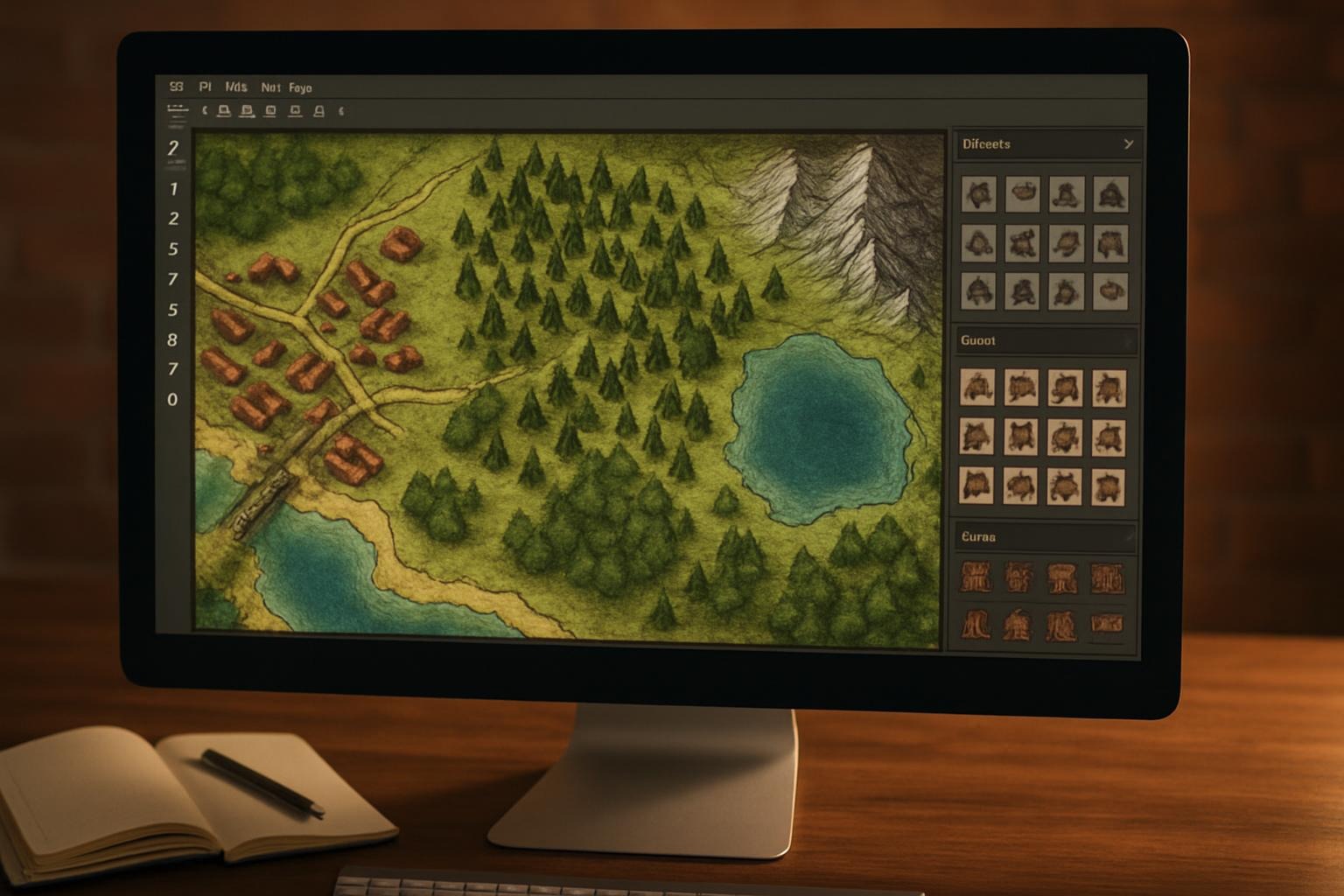
TTRPG Mapmaking Software Comparison
| Tool | Platform | Cost model | Best for |
|---|---|---|---|
| Inkarnate | Browser | Free tier + subscription upgrade | Versatile world maps + battle maps |
| Wonderdraft | Windows/Mac/Linux desktop | One-time purchase | Fantasy region / world maps |
| Dungeondraft | Windows/Mac desktop | One-time purchase | Dungeon / interior / battle maps |
| Dungeon Fog | Browser | Freemium / subscription | Map builder for TTRPGs (indoor + outdoor) |
| Campaign Cartographer 3+ (CC3+) | Windows | One-time purchase (+ add-ons) | High-detail professional maps |
| Worldographer | Windows/Mac/Linux? / maybe browser | One‐time or subscription? | World / region / hex-map style |
| MapForge | Windows/Mac | One-time purchase | Tactical maps, battlemaps, hex etc |
| Dungeon Scrawl | Browser | Free (with paid upgrades) | Quick sketch maps, dungeon layouts |
| Azgaar’s Fantasy Map Generator | Browser | Free | Automated world map generation |
| Donjon Map Generator | Browser | Free | Random map generation (dungeons/cities) |
| AutoREALM | Windows (maybe Wine) | Free/open-source | Vector map creation for fantasy settings |
| Affinity Photo / Adobe Photoshop / GIMP | Windows/Mac (and GIMP cross-platform) | One-time / subscription / free | Full graphic suites (map-making via illustration) |
| Clip Studio Paint / Procreate | Mac/iPad/PC | One-time / app purchase | Hand-drawn maps, stylized maps |
| Tiamat Tile Mapper | Browser | Free / low cost | Dungeon tile-based maps |
| GM Friend | Browser | Free / minimal | Quick overland hex/dungeon maps |