
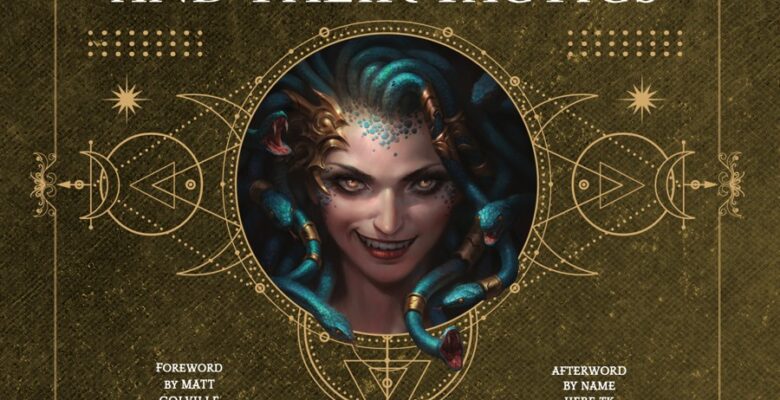
This entry in Media Lab Books’ GM-focused line reframes a familiar prep problem: memorable villains take time, and time is what most GMs don’t have. Built as a re-edited “deluxe” update of Jetpack7’s earlier Masters, Minions & Tactics—expanded and redesigned—The Game Master’s Book of Villains, Minions and Their Tactics aims to be your one-stop shelf pull when you need a boss who feels like the smartest person in the room and a plan for how they fight. The package promises “more than two dozen” BBEGs (specifically, twenty-five), tactics for 75+ minions and bosses, three one-shots, and guidance for building your own antagonists—squarely targeted at 5e tables.
🧰 What’s Inside (at a glance)
- 25 “Big Bosses” with lore, goals, lairs/hooks, stat blocks, and tactics summaries that go beyond “they multiattack.”
- 75+ minions/boss tactics compiled so you can slot in on-theme underlings and know how they’re meant to behave on the battlefield.
- Three one-shot adventures tuned to showcase the book’s antagonists and tactics in play.
- Villain-creation guidance that walks you through inventing your own BBEGs and minions, tying concept to combat behavior.
- New to this edition: five villains exclusive to the Media Lab Books release, plus a full re-edit and redesign.
The editorial stance is “drag-and-drop”: you can read a single entry, grab the hooks and tactics, and run tonight. That approach is consistent across the series, but here it’s especially valuable since villains tend to be campaign tentpoles rather than incidental encounters.
🗡️ Tactics That Matter (at the table)
The best part of the book is how it ties narrative identity to combat behavior. A necromantic mastermind doesn’t just have undead; their scripted priorities, minion synergies, and terrain leverage are laid out so the fight expresses the character’s story without you reverse-engineering it. Likewise, the minion section functions as a “behavioral index”—you can pick a creature archetype and immediately see how it’s meant to pressure PCs (lockdown, skirmish, disruption, attrition). That makes it easy to build coherent encounter packages: boss + bodyguards + a battlefield plan.
The one-shots are compact examples of that design philosophy. Each adventure is structured to spotlight a different villain profile and demonstrate the associated play pattern—useful as a learning tool for newer GMs and a time-saver for veterans who want an instant showcase before folding the antagonist into a larger arc.
🧷 Highlights
- Prep-speed boosters: The “how they fight” blurbs do a lot of heavy lifting—less rereading mid-session, more running the plan. If you’ve ever paused to puzzle out legendary action sequencing or minion positioning, you’ll appreciate the quick-start clarity.
- Campaign-friendly villains: The 25-BBEG spread covers tiers, genres, and tones, giving you room to escalate an antagonist across levels or swap in a different flavor without retooling your whole story.
- Edition-aware without being shackled: It’s firmly 5e, but the conceptual pieces—objective trees, chain-of-command structures, and encounter pacing—translate cleanly to other fantasy systems with light adaptation.
- Edition update value: If you missed the Jetpack7 book, this version’s redesign, new villains, and consolidated minion tactics make it the better buy; if you owned the original, the added content plus cleaner presentation may still be compelling.
⚠️ Caveats
- Stat-block density varies: “Drag-and-drop” means some entries emphasize battlefield plan over deep mechanical novelty. If you’re hunting for wildly bespoke mechanics every time, a few bosses may feel straightforward. (The tactics notes still help the encounter play smarter.)
- 5e-first assumptions: Guidance is tuned for 5e action economy and creature roles; GMs running non-5e systems will be translating conditions and abilities on the fly.
- Continuity hooks are broad: The plot seeds are intentionally system-agnostic and setting-neutral. That’s great for slotting into homebrew, but worldbuilders may wish for deeper setting entanglements out of the box.
🧩 Where It Fits in the Series
If Random Encounters books are your idea generators and Traps/Puzzles & Dungeons is your infrastructure, Villains, Minions & Their Tactics is the opposition doctrine—the why and how behind the fights your players remember. It also pairs neatly with the line’s other “plug-in” volumes: pick a villain here, then raid Legendary Locations for the set piece and NPCs for lieutenants. As a practical upgrade to the earlier Jetpack7 material—now with five new BBEGs and a full redesign—it feels like the canonical version to own for 5e-focused tables.
🎯 Verdict
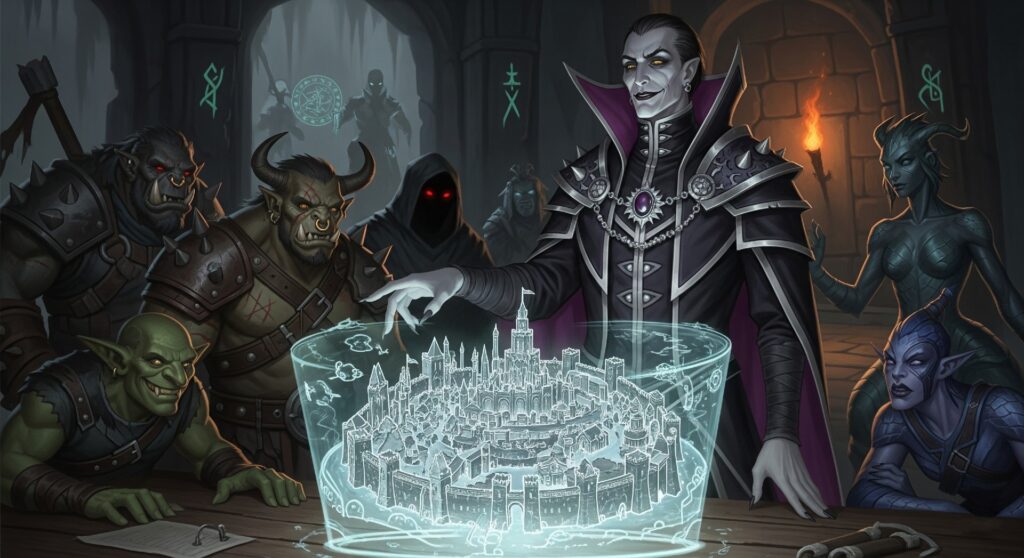
The Game Master’s Book of Villains, Minions and Their Tactics is a GM’s time-saver with teeth. The book’s core promise—villains whose identities are reflected in clear, runnable tactics—lands. You get 25 bosses you can deploy tonight, a thick bank of minion behaviors to build encounter coherence, three ready-to-run showcases, and a guided path to inventing your own antagonists. That combination makes it equally useful for new GMs learning to express theme through combat and for veterans who want to speed-prep without sacrificing encounter quality. If your table is 5e-centric and you’ve ever wished your BBEGs felt as cunning in combat as they do on paper, this one earns a spot within arm’s reach.