
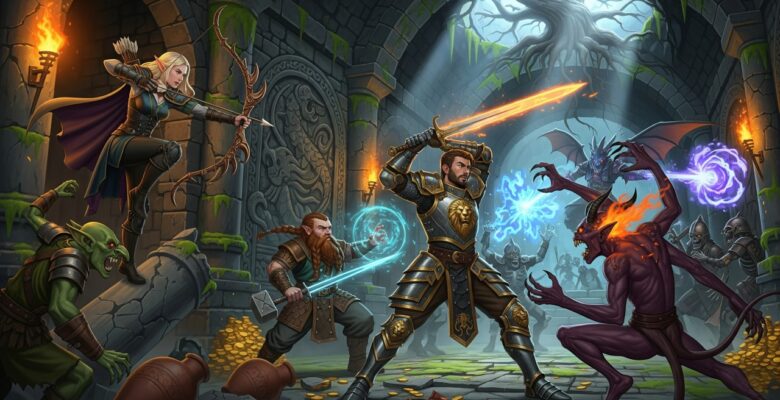
The Titan of Tabletop RPGs
Dungeons & Dragons (D&D) is the game that started it all—the original tabletop roleplaying game, first published in 1974 by Gary Gygax and Dave Arneson. Since its humble beginnings as a fantasy wargame spinoff, D&D has grown into a global phenomenon. It has become synonymous with tabletop RPGs and a cornerstone of geek culture, storytelling, and group creativity.
Now in its updated 5th Edition (2024), Dungeons & Dragons continues to dominate both the physical and digital RPG space. But what makes it so enduring? Is it still the best option for every group?
This review explores the structure, strengths, evolution, and limitations of D&D, offering an in-depth look for new players and experienced GMs alike.
⚙️ System Overview: The d20 Engine
The current version of D&D runs on the d20 System, a unified mechanic where most actions are resolved by rolling a 20-sided die and adding modifiers (such as ability scores or proficiency bonuses) to meet or exceed a set Difficulty Class (DC).
Core Attributes:
- Six Abilities: Strength, Dexterity, Constitution, Intelligence, Wisdom, Charisma
- Race & Class: Player characters are defined by fantasy races (e.g., elves, dwarves) and archetypal classes (e.g., fighter, wizard, rogue)
- Leveling Up: XP-based or milestone progression, unlocking new spells, abilities, and hit points
- Hit Points (HP): Abstract measure of health; combat is central to the system
- Combat Initiative: Turn-based with grids or theater-of-the-mind options
- Magic System: Vancian-style spell slots, though simplified in 5e
The system emphasizes balance and flexibility, allowing players to create a wide variety of characters with distinct mechanical and narrative identities. While not as crunchy as Pathfinder or as narrative-driven as indie RPGs like Cypher, it strikes a middle ground that is both accessible and deep enough for long campaigns.
🎭 Character Creation & Roleplaying
D&D character creation has become more streamlined in 5e, with an emphasis on quick starts and meaningful choices. Players choose a:
- Species – Grants ability score bonuses and traits
- Class – Determines core mechanics like spells, attacks, and hit dice
- Background – Adds flavor, skills, and roleplaying cues
- Alignment (optional) – Describes moral philosophy, though often ignored in modern play
The 5th Edition greatly expanded opportunities for character expression:
- Personality Traits, Ideals, Bonds, and Flaws – Encourage players to flesh out their backstory
- Customization – Multiclassing, feats, and subclass paths (e.g., Wizard → School of Evocation) allow for meaningful differentiation
The game supports roleplaying but largely leaves it up to players and the DM to interpret how much emphasis is placed on it. Rules-light systems like inspiration points exist to reward good roleplay, but they are not as mechanically central as in games like FATE or Blades in the Dark.
⚔️ Combat and Exploration
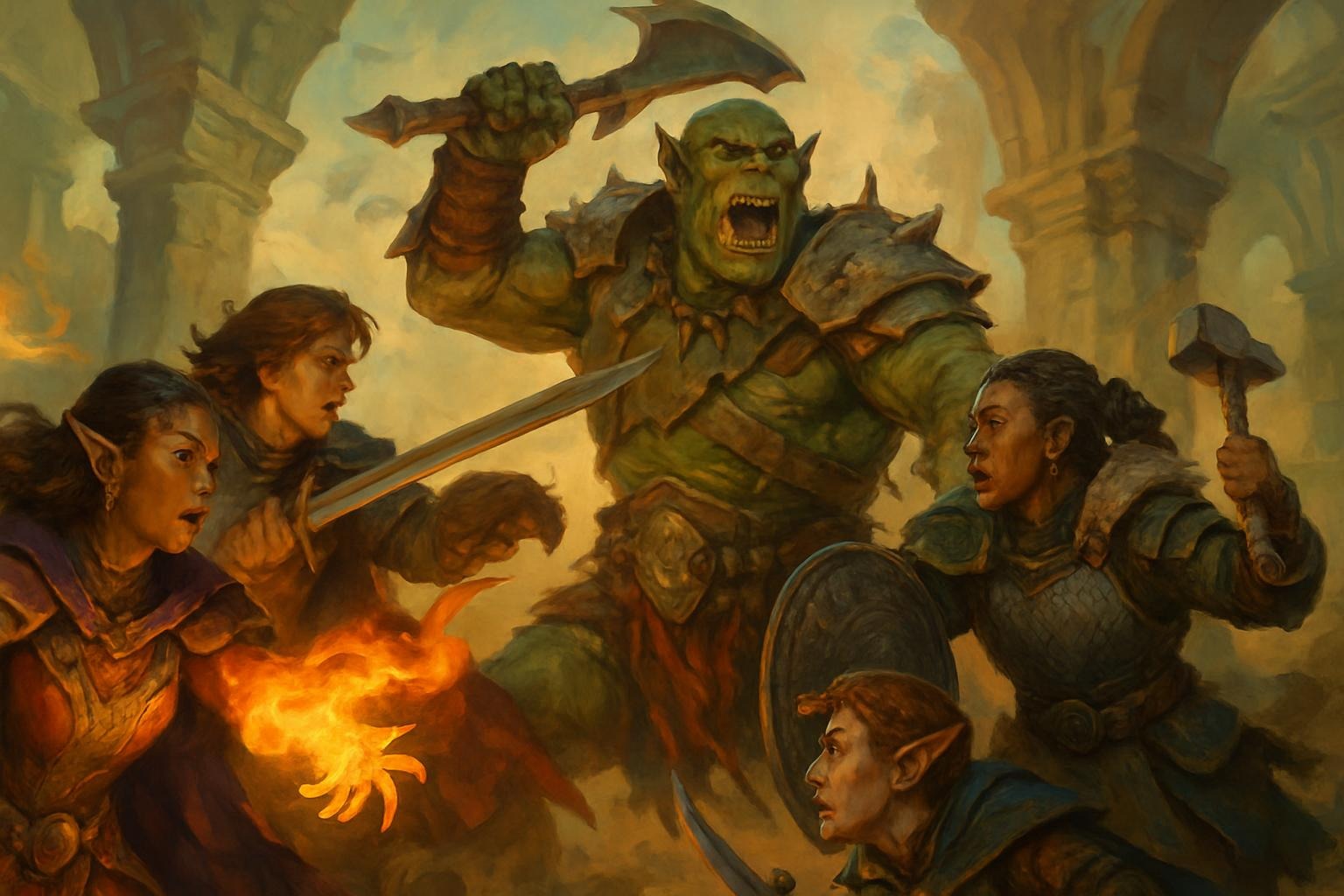
Combat is where D&D shines for tactically-minded players. Using initiative order, players and enemies alternate turns in a grid or narrative setting. Each turn includes actions, bonus actions, reactions, and movement.
Strengths:
- Tactical Depth: Positioning, area effects, opportunity attacks, and spells add richness
- Class Diversity: Melee, ranged, magical, and support options feel distinct
- Monsters & Bosses: The Monster Manual and homebrew support allow for massive variety
Weaknesses:
- Combat Can Be Slow: Especially at higher levels, turns can drag as options multiply
- Balance Issues: Some classes (e.g., casters) dominate at high levels, while martial characters plateau
- Exploration Rules Are Light: Travel, survival, and dungeon-crawling feel underdeveloped without supplemental rules
Still, with the right DM and table, combat can be thrilling and cinematic. 5e tries to maintain “bounded accuracy,” meaning that difficulty checks scale more gradually, keeping monsters threatening longer.
🧙 Magic and Spellcasting
Magic in D&D is vast, versatile, and iconic. Spellcasters access hundreds of spells that:
- Deal damage
- Manipulate environments
- Summon creatures
- Heal allies
- Alter time and space
The spell slot system (first developed in earlier editions) governs casting frequency. Classes like wizards and sorcerers rely on this system heavily, while warlocks use pact magic for fewer but faster recharges.
One critique is that spellcasting can overshadow martial classes, especially at higher levels. A 17th-level wizard can reshape reality, while a 17th-level fighter still swings a sword, albeit many times.
Nonetheless, magic in D&D is a central fantasy flavor and is well-supported with mechanics, lore, and customization.
🧠 Dungeon Mastering: Tools and Flexibility
Running D&D as a Dungeon Master (DM) is a mix of structured preparation and improvisational storytelling. The Dungeon Master’s Guide (DMG) offers guidance on:
- Worldbuilding and encounter design
- Magic item creation
- Alternate rules for rest, healing, and downtime
- Building and balancing encounters using CR (Challenge Rating)
DMs have access to a wealth of content:
- Prewritten Modules: Curse of Strahd, Lost Mine of Phandelver, Storm King’s Thunder, and many more
- Digital Tools: D&D Beyond, Roll20, Foundry VTT, and physical map packs
- 3rd-Party Support: Kobold Press, Grim Hollow, and others expand the game in unique directions
Being a DM is more accessible than ever, though some may find the preparation and responsibility intimidating. 5e supports improvisation, but large campaigns may still require significant planning.
🌍 Settings and Lore
D&D offers several official campaign settings, each with a distinct tone and flavor:
- Forgotten Realms: High fantasy, the default setting with iconic locations like Waterdeep and Baldur’s Gate
- Eberron: Magicpunk world with airships, living constructs, and noir intrigue
- Ravenloft: Gothic horror, centered on the cursed land of Barovia and vampire lord Strahd
- Spelljammer: Fantasy meets space travel and weirdness
- Planescape: Philosophical and metaphysical dimensions
- Dragonlance: Epic war-torn fantasy steeped in heroism
Wizards of the Coast has revived or updated many of these settings in recent years. However, 5e’s default remains Forgotten Realms, which some find overly generic or bloated.
The lore is rich but optional—DMs are free to homebrew worlds or adapt settings from books, movies, or their own imagination.
🧰 Tools and Accessibility
Wizards of the Coast and the community offer a vast ecosystem of tools:
- D&D Beyond (Wizards-owned): Character builder, spell compendium, campaign management
- Virtual Tabletops: Foundry, Roll20, Owlbear Rodeo
- Official Modules: Beginner sets, boxed campaigns, adventure anthologies
- Starter Products: Starter Set, Essentials Kit, and free PDFs help new players learn quickly
D&D’s accessibility has grown significantly through streaming (e.g., Critical Role), podcasts (The Adventure Zone), and pop culture appearances (Stranger Things, Honor Among Thieves). The 5e ruleset is also free in its basic form via the SRD (System Reference Document).
🧩 Community and Culture
Few games have the cultural gravity of D&D:
- Tens of millions of players worldwide
- Massive fan art, fiction, and content creation community
- Dozens of live play shows, conventions, and actual play streams
- Professional-level content from 3rd-party creators
This makes it easy to find groups, share experiences, and access helpful content. However, the size of the community also means opinions vary wildly, and new players can be overwhelmed by discourse or gatekeeping.
🔥 Criticisms and Controversy
Despite its popularity, D&D is not without valid critiques:
- Combat Dominance: Roleplaying and social interaction have fewer rules, often left to improvisation
- High-Level Imbalance: The game becomes increasingly hard to manage at levels 11+
- Slow Innovation: Wizards has been conservative with mechanical changes
- Corporate Direction: Some fans worry that monetization efforts (e.g., VTT subscriptions, OGL changes) conflict with D&D’s creative spirit
🏁 Final Thoughts
Dungeons & Dragons remains the most iconic, expansive, and widely played TTRPG in the world. It offers a welcoming entry point to the hobby, a robust and flexible system for long campaigns, and an incredible volume of support from both official and community sources.
While it’s not perfect—combat-centric mechanics and high-level bloat can be drawbacks—it remains the default for a reason. It is a shared language of imagination that has endured for five decades.