
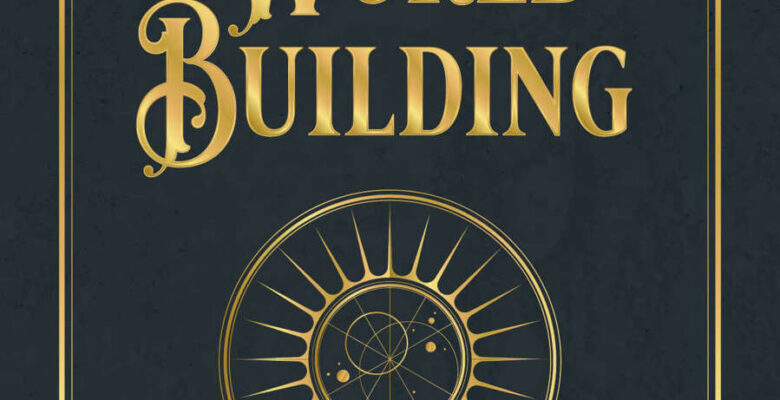
Publisher: Mythmere Games
Author: Matt Finch
Format: Hardcover & PDF
Length: ~350 pages
Use Case: Setting creation, worldbuilding reference, campaign development
🌍 Overview
Tome of Worldbuilding is a companion volume to Tome of Adventure Design, also published by Mythmere Games and written by Matt Finch. While Tome of Adventure Design focuses on generating adventures and game content, Tome of Worldbuilding is squarely aimed at helping game masters, authors, and designers construct detailed, believable, and engaging fantasy worlds.
Like its predecessor, this book is system-neutral, meaning it works with any RPG system—whether you run Dungeons & Dragons, Pathfinder, Shadowdark, or your own homebrew rules. What sets this tome apart from other worldbuilding guides is its extensive use of random-generation tables and idea prompts, paired with a designer’s eye for structure, tone, and consistency.
Rather than a collection of prebuilt setting content, this is a worldbuilding toolkit, encouraging creators to define their setting’s geography, politics, cultures, religions, magic systems, and more using guided prompts or random generation. It is especially useful for sandbox-style campaigns or long-term campaigns where a living world will evolve with player choices.
🧱 Book Structure and Contents
The Tome of Worldbuilding is organized into chapters based on core elements of world design, with an emphasis on practicality and usability. It covers not only the large-scale components of a world (nations, maps, pantheons) but also drills into granular details (naming conventions, religious customs, trade goods, regional superstitions).
Major Themes and Topics:
- World Architecture: Physical geography, terrain types, climate zones, and geological oddities
- Nations and Cultures: Political structure, cultural values, historical legacy, common foods, and warfare
- Languages and Naming Conventions: How languages evolve, influence names, and impact culture
- Economics and Trade: Resource distribution, trade routes, coins, and rare commodities
- Religion and Mythology: Pantheons, creation myths, rites of passage, and heresies
- Magic Systems: Origins of magic, cultural views, magical professions, and arcane artifacts
- Cities and Settlements: How settlements form, city archetypes, urban legends, governance
- Cosmology and Metaphysics: Astral planes, celestial bodies, divine hierarchies, and fate
Each chapter contains a combination of commentary, advice, and dozens of tables. These tables range from traditional d100 lists (e.g., “Unusual cultural taboos”) to more intricate multi-step generators (e.g., creating a religion from doctrine to forbidden rituals).
🧠 How to Use the Book
The Tome of Worldbuilding is primarily a creative springboard. While it’s possible to roll on every table and piece together a setting entirely from randomness, most users will treat it as a creative aid: using the results as inspiration, mixing and matching elements, or refining a preexisting idea.
For example, if you’re creating a desert kingdom ruled by a theocracy, you might use:
- The “Pantheon Generator” to flesh out divine names, spheres, and worship rituals.
- The “Cultural Values” table to define how faith influences daily life.
- The “Architecture and Materials” section to describe cities carved from red stone or adorned with bone relics.
The book encourages coherence and thematic layering, so repeated use of similar prompts deepens a setting instead of fragmenting it.
🔍 Strengths
✅ Extremely Flexible and System-Agnostic
Whether you’re building for D&D, Pathfinder, Cypher System, or a novel, the content fits any fantasy-adjacent setting.
✅ Rich, Specific Prompts
Rather than vague one-word ideas, the tables often include full phrases or questions that encourage deeper thought (e.g., “What is the sacred animal of this culture, and how is it incorporated into their military?”).
✅ Comprehensive Scope
Few worldbuilding books cover so much terrain. It addresses the spiritual, economic, political, and metaphysical aspects of a setting—all in one place.
✅ Works for Both Prep and On-the-Fly Generation
You can roll up an entire region ahead of time or generate city quirks during play with minimal friction.
✅ Complements Other Books Perfectly
This is an excellent companion to Tome of Adventure Design, as it shifts the focus from moment-to-moment gameplay to overarching setting development.
⚠️ Limitations
❌ No Artwork or Maps
Like most Mythmere Games releases, the focus is on utility rather than presentation. Don’t expect full-color spreads or illustrated maps—this is a text-heavy, no-frills utility book.
❌ Requires Interpretation and Adaptation
Beginners might be overwhelmed by the volume of options. Some entries may contradict each other if used without thoughtful curation.
❌ No Integrated Examples
Unlike some design books that walk you through a full setting creation example, Tome of Worldbuilding avoids hand-holding. While this leaves space for creativity, some users may want more guided templates.
🧾 Ideal Use Cases
- Campaign Prep: Build a setting from scratch or deepen an existing world with additional cultural or metaphysical layers.
- Improvisational Play: Flesh out unexpected locations, customs, or histories on the fly.
- Collaborative Worldbuilding: Use tables as group prompts to co-create a shared setting.
- Creative Writing: Fantasy novelists or screenwriters can use it to enrich lore and world detail.
🧠 Final Verdict
Tome of Worldbuilding is a masterclass in practical, system-agnostic RPG design. Its real power lies in its scope and precision—it doesn’t just ask “What is your setting like?” It guides you to ask how, why, and what next.
This book is best suited for GMs and writers who love to build living, breathing worlds that evolve with their players or stories. It doesn’t hand you a setting, it hands you the tools to build one that’s yours and yours alone.