
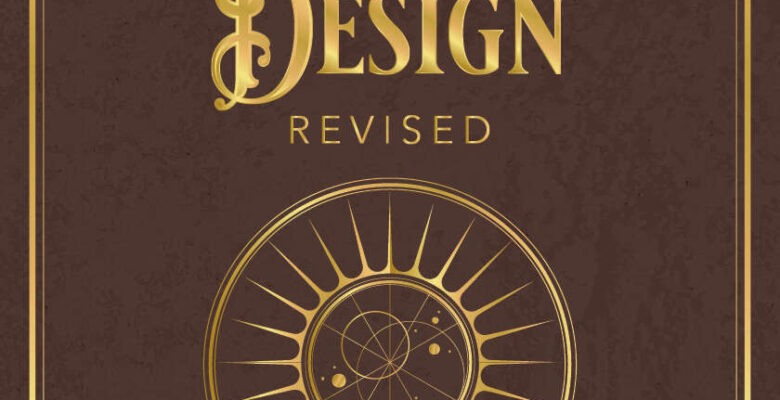
Publisher: Mythmere Games
Format: Hardcover & PDF
Page Count: ~500 pages
Use Case: Adventure generation, sandbox design, creative inspiration
🎯 Overview
The Tome of Adventure Design (Revised) is a dense, tool-rich book created to help game masters generate, structure, and flesh out adventures for tabletop roleplaying games—especially in fantasy settings. Originally published in 2011 by Matt Finch (of Swords & Wizardry fame), this revised edition updates formatting, expands some tables, and clarifies older entries without altering the core structure that made it a cult classic.
This is not a “plug-and-play” adventure book. It’s a system-neutral toolkit packed with hundreds of random tables and prompts, designed to stimulate creativity and provide structure for both improvisation and prep. Whether you’re crafting a full campaign arc or need to generate a dungeon room on the fly, the Tome aims to help you do so quickly and evocatively.
🧩 Structure and Content
The book is divided into four major parts:
Part I: Principles and Starting Points
This section focuses on conceptual frameworks and inspiration—how to build a villain, establish a mystery, or craft the underlying premise of an adventure. You’ll find tables that generate goals, motivations, and plot hooks, along with thematic ideas to seed everything from heists to monster hunts.
Key features:
- Villain motivations and schemes
- Adventure structures by genre
- Quest-generating matrices
- Conflict escalation tools
Part II: Dungeon Design
This is the meat of the book for old-school GMs and dungeon-crawling fans. It helps you generate room contents, architectural quirks, dungeon layouts, and themes. Need a description for a collapsed throne room inhabited by a cursed priest-lich? There’s a table for that.
Highlights:
- Room purpose and contents
- Trap generation and strange features
- Dungeon entrance and exit types
- “Map artifact” tables to inspire interesting layouts
Part III: Non-Dungeon Adventures
Focused on wilderness, urban, and planar settings, this section broadens the scope beyond dungeons. It’s ideal for sandbox campaigns, providing city-building tables, encounter generation, terrain quirks, and ways to make overworld travel feel alive.
Useful tables include:
- Urban neighborhoods and factions
- Hex crawl encounter events
- Regional characteristics and exploration challenges
- Plane-specific anomalies and weird events
Part IV: Monsters, Magic, and More
The final section is a grab bag of systems to develop unique creatures, artifacts, and magical oddities. Instead of just naming a magic sword, you might roll its origin, appearance, personality, and hidden cost.
Includes:
- Monster design and naming matrices
- Unique magical item generation
- Exotic diseases, curses, and magical catastrophes
- Rituals, grimoires, and forbidden knowledge
🛠 How It’s Used
The Tome excels in two modes: prep inspiration and improvised problem-solving. A GM might use it during prep to outline a dungeon, flesh out a city, or randomly develop an artifact central to the story. It’s also great for on-the-fly solutions when players veer off the rails.
Its system-neutral nature makes it easy to pair with D&D (especially OSR systems), Pathfinder, Dungeon Crawl Classics, or even more narrative-heavy games like Cypher System or Into the Odd.
Some GMs will use the tables literally; others will simply treat the results as prompts to riff from. The flexibility of its design allows for both.
👍 Strengths
- Exhaustive and modular: The book includes hundreds of highly specific tables, often layered to allow depth of customization (e.g., generate not just a villain, but their history, goals, and lieutenants).
- Creative and evocative: Entries are not bland. They inspire weird, flavorful results (e.g., “Temple of the Molten Wheel” or “A caravan of telepathic fungal collectors”).
- Excellent for sandboxes: Supports open-world play with ideas for wilderness, urban, and planar exploration.
- Works across systems and editions: Perfect for 5E, OSR, or any fantasy RPG.
- Beautiful revision: The updated layout, font, and usability improvements make the revised edition cleaner and easier to reference.
👎 Limitations
- No mechanics included: This is a creative supplement, not a ruleset. GMs must interpret or stat out everything on their own.
- Density can be intimidating: It’s not light reading. Flipping through 40 tables to build one encounter may slow down prep for newer GMs.
- Not beginner-focused: While excellent for veterans, the lack of structured guidance may leave some newer GMs unsure how best to apply it.
- Requires some filtering: Not all results will fit your tone or world, so GMs will need to curate as they roll.
🎨 Presentation
The revised edition features a more modern layout and updated fonts, with easier-to-read tables. It maintains a clean, minimalist aesthetic—no glossy illustrations or lavish art—but feels refined and professionally assembled. Each table is numbered for easy d100 or d20 use.
🧠 Final Thoughts
Tome of Adventure Design (Revised) is not for everyone—but for the right GM, it’s invaluable. If you love sandbox play, random generation, or designing your own material from scratch, it’s one of the most powerful tools in the tabletop RPG landscape.
Ideal For:
- Sandbox campaign builders
- GMs running weekly open-world sessions
- Improvisational game masters
- Creators of unique dungeons, factions, or artifacts
Not Ideal For:
- Narrative-focused groups looking for structured story modules
- Beginners unfamiliar with sandbox prep
- GMs who prefer tightly defined rule systems and mechanics