
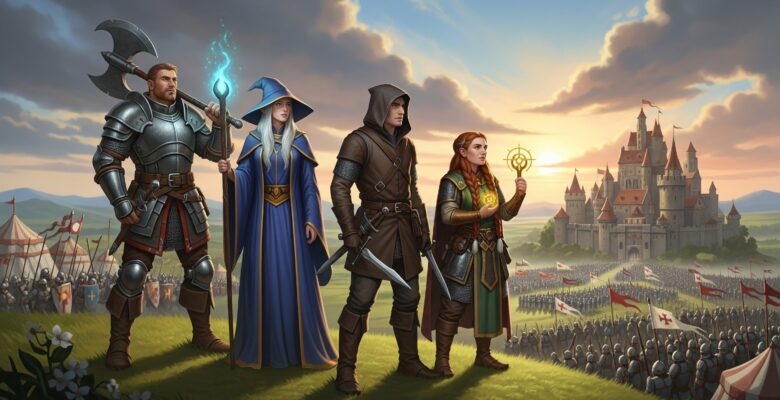
Castles & Crusades (C&C) aims to recapture the feel of old-school fantasy play while cleaning up and modernizing the mechanics into a single, easy-to-teach core: the SIEGE Engine. The Players Handbook is the player-facing spine of that line — it contains character creation, classes, equipment, spells, and the SIEGE rules you need to play. The book deliberately makes the Player’s Handbook sufficient for starting play (the Castle Keeper’s Guide and Monsters & Treasure expand the GM toolbox), so newcomers can learn the system quickly and run sessions without drowning in subsystem complexity.
⚙️ The SIEGE Engine — elegant, unified resolution
Instead of separate saving throws, skill checks, and varied subsystems, C&C resolves most non-combat challenges with an attribute check against a Challenge Class (CC). Attributes are flagged as primary or secondary for a character; primary checks use a lower base challenge and secondary a higher one, with the Castle Keeper adding a difficulty rating to produce the final CC. A single d20 roll plus modifiers settles the result. This single approach dramatically shortens lookup time and keeps tableflow brisk — combat remains tactical but the non-combat adjudication is unified and predictable.
🧱 Character creation & classes — familiar but focused
If you’ve played classic D&D, character creation will feel comfortable: pick a race (called ancestry), pick a class from the archetypal set (fighter, cleric, thief, mage, ranger, etc.), roll attributes, and select starting equipment and spells. The Players Handbook offers thirteen classes and a handful of ancestries across printings; the emphasis is on archetypal roles rather than complex subclass trees. Advancement uses level-based increments that tie into the SIEGE checks rather than multiplying micro-systems, so progression remains mechanically meaningful without ballooning rules overhead.
🧙 Magic, spells, and the arcane economy
Spellcasting in C&C reads as classic and functional: spells are evocative, and the PHB provides usable lists and clear casting mechanics that integrate into the SIEGE framework. Spell slots and spell lists will be familiar to old hands, but the presentation keeps text concise and example-driven so GMs can adjudicate effects without parsing paragraphs. For GMs who want expanded magical breadth — ritual rules, new schools, or expanded spell lists — the Castle Keeper’s Guide and Adventurer’s Spellbook expand what’s in the PHB.
🎭 Playstyle & table cadence — fast, courtious to GM rulings
The PHB encourages a style of play that privileges improvisation, exploration, and player creativity. Because the mechanics are intentionally light, the Castle Keeper is given latitude to rule and tailor challenges rather than being forced into minutiae. Combat is still dangerous and tactical, but the streamlined checks for climbing, perception, persuasion, and other tasks make non-combat scenes move quickly. This produces sessions where the group spends more time in the fiction — mapping, bargaining, investigating — not in rules lookups.
✨ Strengths — why the Players Handbook is worth your shelf
- Simplicity that scales: The SIEGE Engine is easy to learn (15 minutes to grasp, as the publishers note) yet supports long campaigns because it scales via challenge modifiers and level bonuses rather than new subsystems. New players and veteran GMs both benefit.
- Old-school tone, modern clarity: The PHB captures the exploratory, risky feel of early fantasy RPGs while presenting rules and examples in a modern, readable layout. It keeps the flavor without carrying archaic cruft.
- Player-first design: Because so much of the core adjudication is in the PHB, players can self-reference during play. The book includes clear equipment lists, sample play excerpts, and examples that reduce GM overhead.
- Active support & printings: Troll Lord has continued to update and reprint the PHB (multiple printings and a Reforged edition), which keeps errata and clarifications in circulation — a reliability boon for buyers.
⚠ Things to watch — tradeoffs and caveats
- Rulings-heavy tables require a decisive GM: The system is designed to encourage rulings over rules. That’s great if your GM is comfortable adjudicating and improvising; it’s less comfortable if your table prefers exhaustive, codified mechanics. New GMs may need time to develop that decisiveness.
- Less crunch for niche preferences: If your players enjoy hyper-detailed tactical combat, intricate crafting rules, or simulationist subsystems, the PHB’s light approach may feel unsatisfying. The line addresses many expanded needs via supplements, but the PHB itself remains intentionally spare.
- Edition/printing differences: Over two decades the PHB has seen many printings and a few changes; buyers seeking a particular layout or the latest errata should check Troll Lord’s product pages for the recommended printing. The Reforged/2024–2025 printings consolidate much of that material.
🧭 Where the Players Handbook fits in your library
The PHB is the essential starting point if you want to run C&C: it contains the playable rules, classes, spells, and core adjudication. For GMs, the Castle Keeper’s Guide and Monsters & Treasure expand campaign tools and encounter design; for players, the PHB plus the Adventurer’s Spellbook and the Players Archive are natural next purchases. For groups who like modular expansion, Troll Lord’s ecosystem (adventures and setting Aihrde books) plugs into the PHB cleanly.
🗡 Final verdict
The Castles & Crusades Players Handbook is a disciplined, player-focused core book that does two things well: it revives the exploratory, improvisational spirit of early fantasy play, and it packages that spirit into a modern, unified rules engine (the SIEGE Engine) that reduces friction at the table. If your group values speed, drama, and a GM-friendly sandbox more than exhaustive subsystem detail, the PHB is an excellent cornerstone for campaigns. It’s approachable for newcomers and flexible for long campaign play — a strong choice for anyone who enjoys old-school tone without old-school tedium.