
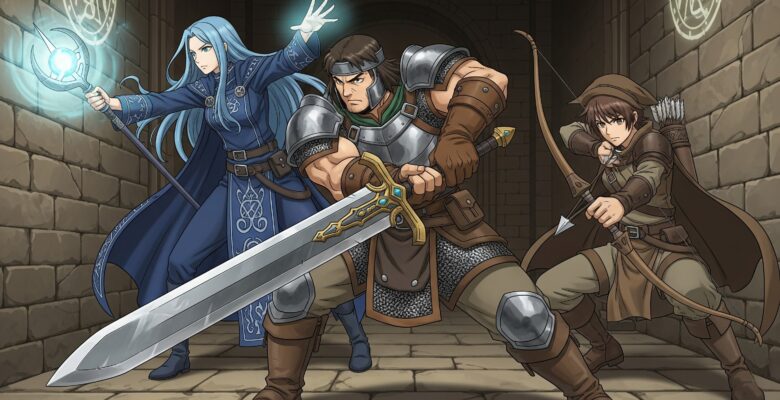
Sword World RPG (ソード・ワールド) is Japan’s best-known homegrown tabletop roleplaying game: a class–skill hybrid fantasy system that helped define Japanese TRPG culture and spawned novels, “replay” books (published session logs), video games, and dozens of supplements. First published in 1989, the system was substantially overhauled as Sword World 2.0 in 2008 and refined again into Sword World 2.5 in 2018 — the edition most groups today reference.
What it is and how it feels
Mechanically, Sword World is built around a simple, gratifying 2d6 core where results are mapped through rating tables to produce a broader range of outcomes than raw 2–12 would normally allow. That “2d6 → rating table” approach (often called the 2d6 system in Japanese circles) gives the system a crunchy, predictable probability curve while enabling a surprising variety of damage, effect and skill-resolution results. It’s a hybrid of class packages (called ginō or “talent packages”) and a skill-based approach — the feel is more tactical and mechanical than many narrative RPGs, but it’s also lighter and faster to run than some Western crunchier systems.
Editions and scope
Sword World’s long life has produced three major eras: the original 1989 rules (closer to traditional D&D inspirations and the Record of Lodoss War milieu), Sword World 2.0 (a redesigned, modernized ruleset introduced in 2008), and Sword World 2.5 (2018), which smooths numerical oddities, expands classes and races, and reorganizes the rules into three core volumes so GMs can gradually introduce new concept tiers as characters level. 2.5 is backward-compatible with 2.0, but it’s the edition that most new products target.
Character options and progression
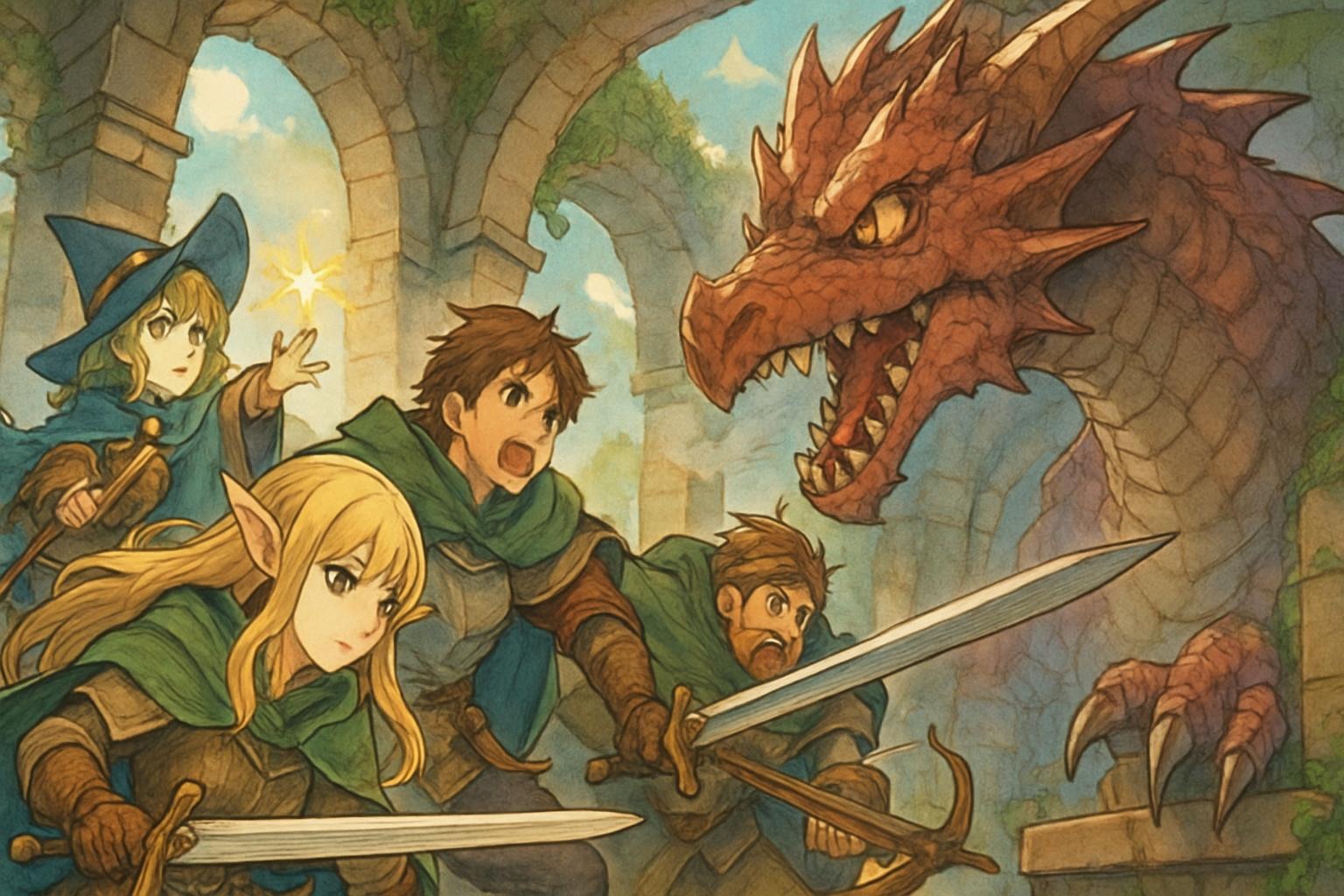
Character creation centers on ginō (class/talent packages) rather than rigid class archetypes: each ginō bundles appropriate skills, techniques and growth tracks. Over the life of 2.0 → 2.5, the catalog of ginō expanded from a handful to dozens (including fighters, priests, sorcerers, bards and a raft of niche, flavor-rich packages). The system also offers a broad race palette — humans, dwarves, elves, half-elves and the small “GrassRunner” race, plus many Raxia-era additions introduced in 2.0/2.5 — so parties can be mechanically varied while staying readable for new players. Level tiers are clear and familiar, with each core book covering roughly a segment of progression (Book I: levels 1–6, Book II: to level 10, Book III: to level 15 in 2.5).
Combat and rules feel
Combat is quick, tactical, and depends on the 2d6 → rating conversion to resolve attacks, damage and special effects. Weapons and armors are balanced via key numbers and rating lookups, letting even modestly-equipped foes pose a threat if the table and modifiers line up against a player’s roll. The table lookup mechanic makes runs of the dice feel more granular and “crunchy” than a single d20 roll, yet not so fiddly as to halt play. For PVP or delicate tactical choices it rewards informed decisions; for groups who prefer cinematic simplicity it can feel more mechanical than necessary until a table gets used to the rhythm.
Setting — Forcelia and Raxia
Sword World’s default setting is Forcelia, a high-fantasy world that at times incorporates (or pays homage to) the older Lodoss and Crystania material familiar to fans of Japanese fantasy. With the 2.0 redesign came Raxia, a broader, more whimsical continent that gave creators room to add new races, monsters and local color. The setting tone swings between classic western-fantasy tropes and JRPG-like flourishes — think Final Fantasy energies mixed with old-school tabletop sensibilities — which makes it especially accessible to players coming from anime, JRPGs, or light novel culture.
Cultural footprint and replay publishing
One cannot talk about Sword World without mentioning Group SNE’s innovation of the “replay”: edited session transcripts turned into best-selling reading material. Sword World’s replays, and the company’s broader publishing activities (novels, manga, and light media), helped the system reach audiences far beyond the traditional TRPG hobby niche. The franchise’s cumulative commercial footprint is large — the universe spawned many spin-offs and adaptations over decades. That cultural presence is a feature: newcomers in Japan often encounter Sword World indirectly through fiction and replays before ever rolling dice.
Supplements, product line and global availability
Sword World has a vast supplement ecosystem: campaign books, monster tomes, replays, regional modules and rules expansions (ranging from tools for life skills to high-level guild and nation mechanics). 2.5 is sold as a multi-book core with many support releases. In recent years there has been growing interest in an English edition; localization initiatives and distributors have publicly discussed bringing Sword World to a broader market, so non-Japanese readers may see official English releases in coming years (fan translations and community wikis already help bridge the gap). If you prefer buying ready-to-use, widely-distributed products in English right now, local availability is still limited but improving.
Strengths
- Playability & Familiarity: The 2d6 base is intuitive for new players and comfortable for veteran TTRPG audiences. The rating table gives satisfying granularity without massive charts.
- Strong Media Ecosystem: Replays, novels and adaptations supply ready hooks and tone references; groups can draw from a large bench of published scenarios, characters and lore.
- Modular Learning: The three-book 2.5 rollout helps GMs and groups absorb complexity gradually (levels & options tiered across volumes).
Weaknesses / Considerations
- Language Availability: Historically Japan-centric publishing means many core titles and supplements remain untranslated; while fan resources exist, official English support has been scarce until recent announcements.
- Crunch for Some Groups: The rating-table approach is a small barrier for narrative-first groups who prefer single-roll resolution. Sword World rewards rules familiarity.
Who should play it?
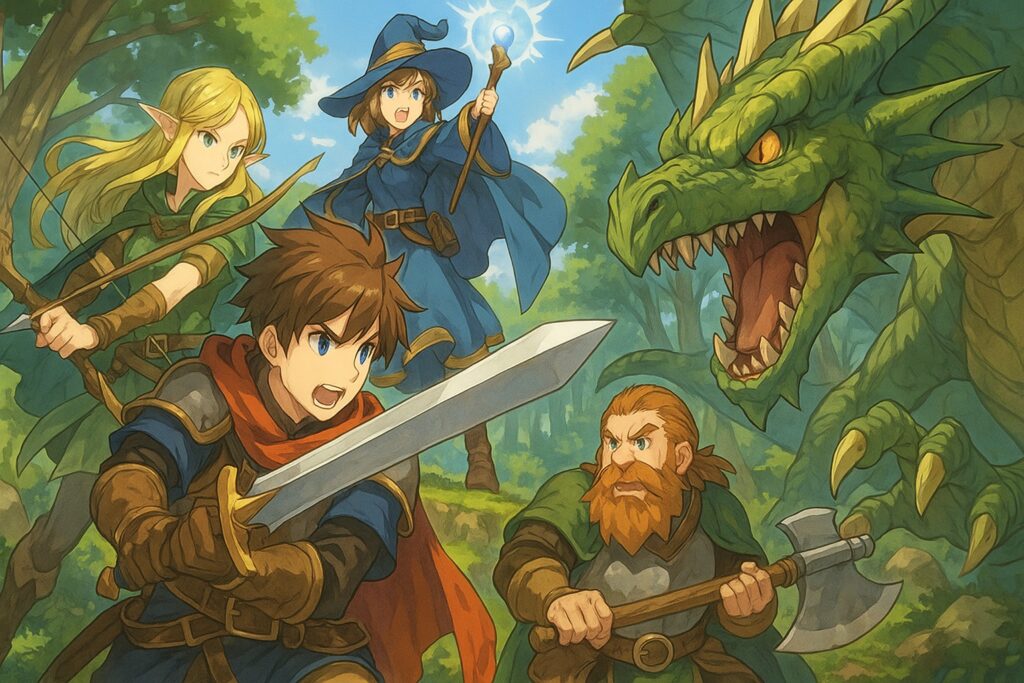
Sword World is ideal for groups who enjoy JRPG or light-novel aesthetics, like a structured hybrid of class and skill systems, and want a rules engine that supports episodic adventures with a heavy publication ecosystem. GMs who like ready-made replays and narrative hooks will appreciate the wealth of franchise materials; rules-savvy players will enjoy the tactical clarity of the 2d6 system.
Verdict
Sword World stands as one of Japan’s most consequential TRPGs: a game that blends approachable dice mechanics, an immense published corpus, and an approachable JRPG-meets-tabletop tone. If you can overcome language barriers (or wait for localized editions) and want a system with long institutional support and lots of published adventure fodder, Sword World 2.5 is highly recommended. For players who prefer streamlined, purely narrative systems, it may feel heavier than necessary — but the payoff is a deep, well-loved fantasy engine with a unique cultural pedigree.