
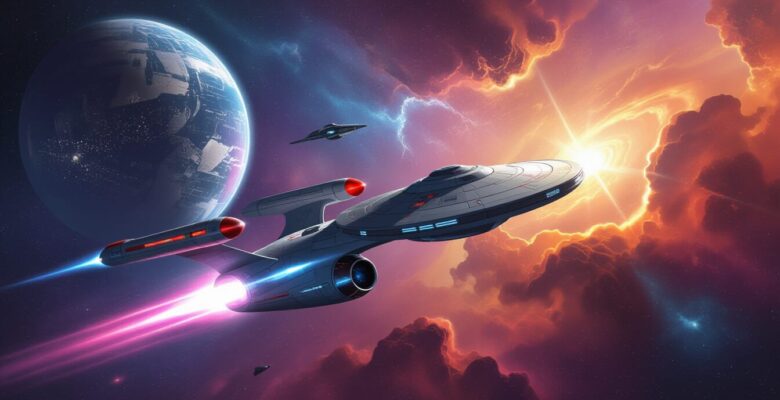
The Star Trek Adventures Second Edition Core Rulebook (often abbreviated STA 2E) is the newly released, refined version of Modiphius’ flagship Star Trek tabletop RPG. It launched in August 2024, with preorders beginning in May 2024. The core rulebook is a 376-page, full-color hardcover (PDF included) that updates the rules, setting material, and options for players and GMs alike. The aim is to streamline the system while retaining its Star Trek feel, expanding play options (especially outside of Starfleet), and improving layout and clarity over the First Edition.
🛠 What’s New & What’s Carried Over
STA 2E refines much of what First Edition established, adds new options, and removes or retools mechanics for clarity. Some of the most notable changes:
- Removal of Challenge Dice: One major mechanical change is dropping the “Challenge Dice” mechanic that First Edition used; in STA 2E damage, extended tasks, and conflict resolution have been rebalanced to account for this removal.
- Emphasis on Traits and Social Conflict: Social conflict receives more structured support; traits (player and starship) are more prominent and useful in resolving both narrative and mechanical situations.
- Customization of Characters and Starships: The new edition offers more variety in species abilities, starship talents, and customization options for backgrounds. Also supports playing outside of Starfleet roles more easily (e.g. Klingon, Romulan, etc.).
- Updated Injuries, Stress, and Recovery Rules: These subsystems have been revised to improve pacing and reduce downtime.
- Improved Layout and Organization: One of the more praised updates is in how the book is structured: related rules are more cohesively grouped, color coding and clearer section headers make it easier to find material. Many users note 2E is much more reference-friendly than 1E.
🌌 Content & Scope
Here’s what the core rulebook delivers in terms of playable content, setting, and support:
- Species & Character Options: Fourteen species are included for players (e.g. Andorian, Cardassian, Klingon, Orion, Vulcan, etc.), each with unique species abilities. There are backgrounds, traits, and talents to further customize characters.
- Starship Classes & Starship Rules: The core book includes stats and rules for fifteen starship classes (Federation, Klingon, Romulan, etc.), starship talent trees, roles for starship crew members, and rules for starship conflict. Players can more easily take on roles aboard a ship regardless of their character type.
- Setting Material & Primer: A primer on the Star Trek universe from the 21st through 32nd centuries, including societies, scientific concepts, species, known aliens and antagonists (Dominion, Borg, Klingons, Romulans, etc.), galaxy-scale politics, and cultural/historical context. Also includes historical logs, personal diaries, intercepted communications for flavour.
- GM Guidance & Tools: Advice for running Star Trek adventures, dealing with social conflict and moral challenges, mapping stories, managing starship combat, and scaling adventures. Includes pre-gen characters, starter mission (“The Celestial Algorithm” via the Quickstart), and sample non-player characters and antagonists.
🎯 Play Experience: What Works, What’s Improved
From community feedback and early reviews, the Second Edition delivers real improvements to playability:
- Clarity & Accessibility: Players and Keepers report that finding rules is easier; the color-coded sections for lore, core rules, and GM content reduce flipping. Compared to First Edition, which many criticized for an LCARs-aesthetic layout that hampered readability, 2E is seen as better organized.
- Streamlined Conflict & Tasks: Removing the Challenge Dice and revising the extended tasks makes conflict resolution smoother. The changes reduce “rule overhead” and increase story momentum.
- More Player Roles & Flexibility: With stronger support for playing non-Starfleet characters, and more starship talent and customization, players have more agency in shaping their characters and roles aboard ships. This helps diversify campaign styles beyond strictly Starfleet missions.
- Better Side Content: The inclusion of sample adventures, updated crew packs, starship stats, and antagonists from multiple factions helps GMs get started without much homebrew. The starter set / Quickstart “The Celestial Algorithm” is well-received as an immediate plug-in for new players.
⚠ Weaknesses & What Still Needs Attention
No system is perfect, and while STA 2E fixes many issues, some lingering challenges remain:
- Balance of Species & Talents: Some players feel a few species or talent choices seem mechanically more beneficial than others, especially in social conflict or starship roles. As with many RPGs, options that provide multiple utility may overshadow more narrowly focused ones. Early reports suggest this is an area still under observation.
- Artistic / Aesthetic Inconsistency: While the layout is improved, some reviews and community comments point out that art styles, uniform/era details, and visual consistency vary—sometimes jarringly. Uniform era mismatches and combadge placement are examples noted by Trek Central and others.
- Learning Curve in Advanced Rules: While the core mechanics are reasonably accessible, starship combat, extended tasks, and certain GM tools remain complex enough that new players may need time to absorb them. Some modules of the mechanics weren’t fully intuitive until after playing or watching others run them.
- Transition for 1E Owners: Although backward compatibility is promised, some first edition content requires updates (crew packs, supplementary books) to align with the new rules. There has been some confusion among buyers about which previous products have full compatibility or require patching. Modiphius has released some updated crew stats (for example, TNG and Picard crew packs) for free.
🧭 Who STA 2E Is Best Suited For
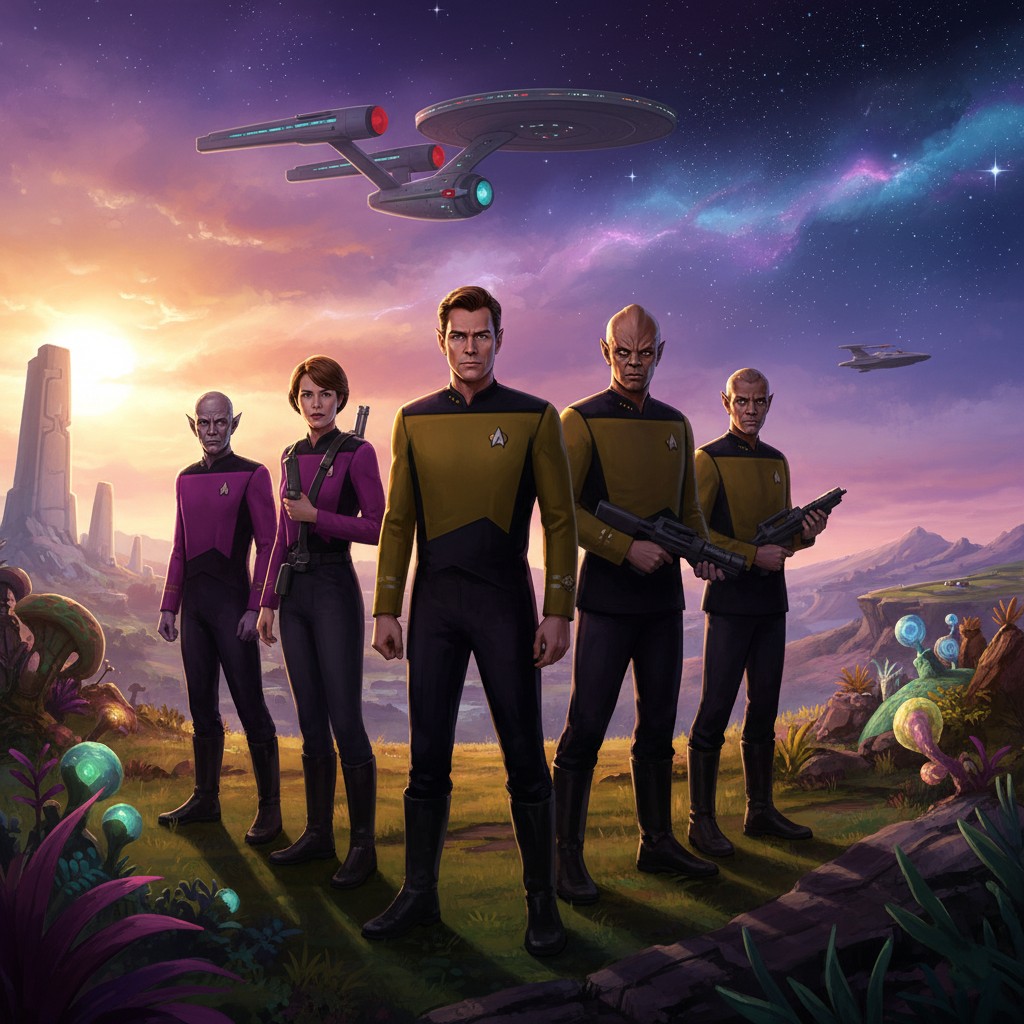
- Star Trek fans and canon lovers who want a tabletop product that embraces lore, species variety, and multiple eras—including Strange New Worlds etc.—with good production value.
- Game Masters who want better organization and easier reference — 2E is for people who found 1E frustrating in its layout or rule lookup.
- Play groups who enjoy both shipboard/duty missions and away team adventures, especially with a mix of exploration, social conflict, and occasional combat.
- Newcomers to the system, thanks to the Quickstart, pregens, and more streamlined core mechanics.
Less ideal for:
- Those who prefer extremely crunchy, tactical microsubsystems for every aspect—STA 2E makes some of those optional rather than core.
- Groups heavily invested in 1E gear/faction packs may face some friction until updated content is fully released or patched.
- Players very sensitive to aesthetic consistency may notice art or era mismatches.
🗡 Final Thoughts
Star Trek Adventures – Second Edition Core Rulebook represents a strong evolution of the system. It keeps what worked in the First Edition—narrative style, the 2d20 engine, rich lore and species—while refining layout, streamlining mechanics, and giving players and GMs clearer tools and more flexibility. For many who felt 1E was weighed down by its own design (especially in presentation), 2E is a course correction that largely sticks the landing.
If you want a Star Trek RPG that respects canon, supports a variety of crew styles (Starfleet, Klingon, Romulan, etc.), and offers both cinematic moments and smaller, moral/ethical drama, this is one of the best modern RPGs in that space. It may not satisfy every crunchy mech-lover or collector seeking flawless visual consistency, but it offers excellent value, strong improvements, and a mature toolkit for telling Star Trek stories in tabletop form.