
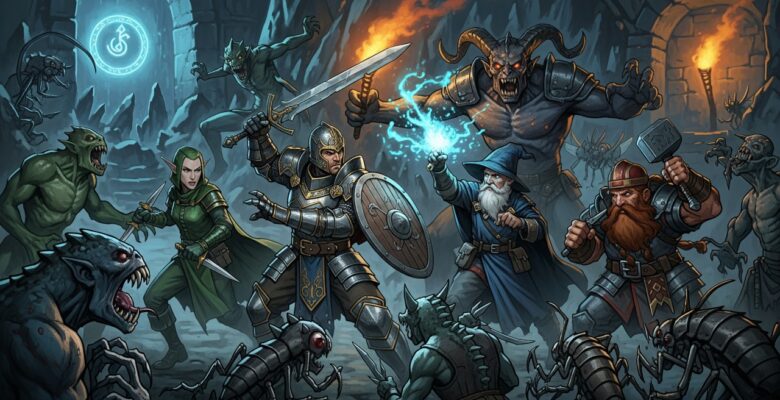
Shadow of the Weird Wizard (SotWW) is a fantasy tabletop roleplaying game developed by Robert J. Schwalb, creator of the critically acclaimed Shadow of the Demon Lord (SotDL). While both games share a core engine and similar design philosophies, Weird Wizard is a spiritual successor with a tone that blends whimsical fantasy, grim adventure, and dark fairytale surrealism.
Where Shadow of the Demon Lord dove deep into horror and apocalyptic doom, Shadow of the Weird Wizard offers a more accessible, heroic, and quirky take on fantasy adventuring, without abandoning the tight, streamlined mechanics that made its predecessor a hit. In short, it’s a “dark-but-fun” RPG that manages to feel fresh, familiar, and flexible.
Setting: The Wayward Land and Its Mysteries
The game is set in the Wayward Land, a fractured realm once ruled by the enigmatic Weird Wizard, a powerful figure who vanished under mysterious circumstances. The land is now dotted with warring factions, magical catastrophes, arcane experiments gone wrong, and remnants of a once-grand civilization.
SotWW’s tone blends the melancholy of a broken world with the strangeness and humor of magical absurdity. Players may encounter talking mushrooms, cursed dolls, or haunted tea kettles—all while navigating deep dungeons or saving villages from eldritch threats.
Despite the humor and absurdity, the setting supports serious storytelling. In fact, it invites players to oscillate between lighthearted adventure and dangerous, character-defining decisions.
Core Mechanics: Streamlined and Flexible
Shadow of the Weird Wizard uses an evolution of the d20-based engine from Shadow of the Demon Lord, with a focus on accessibility, quick resolution, and modularity.
🎲 Attribute Rolls and Boons/Banes
- Characters roll a d20 for most checks.
- Add a relevant attribute modifier (Strength, Agility, Intellect, Will).
- Add the result of the highest Boon (bonus d6) or subtract the highest Bane (penalty d6) if applicable.
This simplified advantage/disadvantage system encourages fast play without sacrificing tactical depth.
🧠 Attributes and Defense
There are four core attributes:
- Strength: Physical power
- Agility: Speed and finesse
- Intellect: Reason and knowledge
- Will: Mental toughness and leadership
Characters also have derived stats such as Health, Defense, and Speed, which are simple and easy to track.
Character Creation and Advancement
Character creation in SotWW is quick, flavorful, and full of surprises.
🔮 Level 0 – The Origin Stage
Characters begin at Level 0 with:
- Ancestry (e.g., human, dwarf, goblin, clockwork, or new options like brownie or faun)
- A background and calling (narrative hooks)
- Basic gear and stats
This stage introduces the character as a commoner or lowly adventurer, setting the stage for growth.
🛤️ Level 1 and Beyond – Path System
As with SotDL, characters choose from a tiered Path system:
- Novice Path at Level 1 (e.g., Warrior, Magician, Priest, Rogue)
- Expert Path at Level 3 (e.g., Beastmaster, Loremaster, Spellblade)
- Master Path at Level 7 (e.g., Chronomancer, Avenger, Puppeteer)
There are dozens of paths, allowing for incredible character variety without the burden of mechanical complexity. Players can build narrative-driven characters like a pacifist priest, cursed illusionist, or monster-hunting rogue.
Each level provides meaningful progress—new abilities, spells, or bonuses—making level-ups feel rewarding. Full campaigns typically range from 10 to 15 sessions, making SotWW perfect for short arcs or longer epics.
Magic and Weirdness
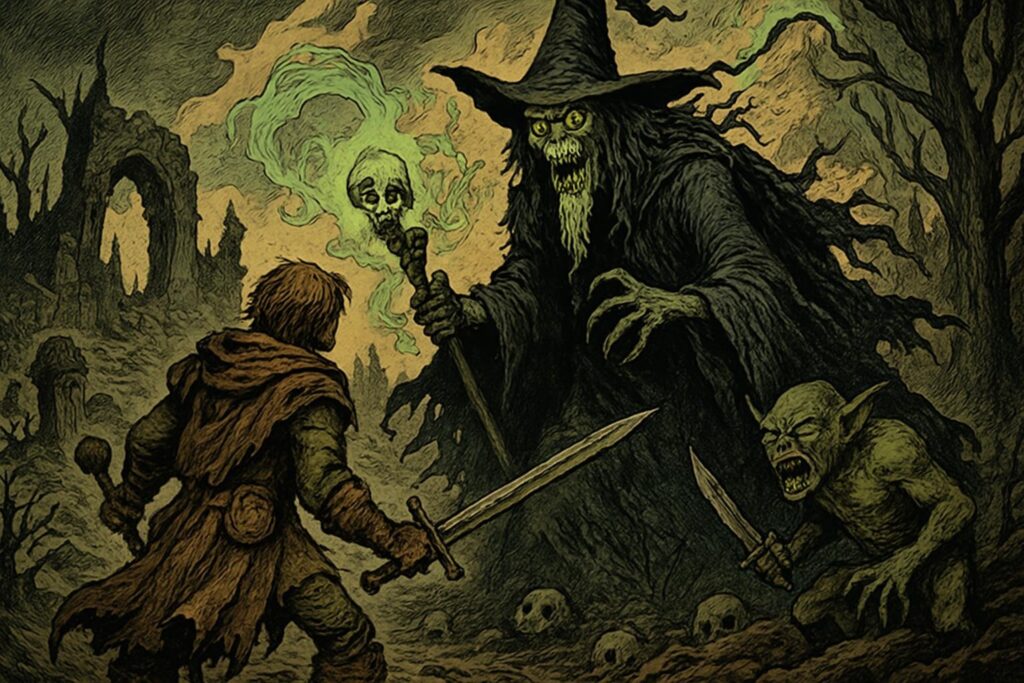
Magic in Weird Wizard is as wild and diverse as the setting itself. Spells are divided into Traditions (schools of magic), and each tradition has thematic coherence and scaling spells.
Examples of magical traditions include:
- Illusion: Trickery and misdirection
- Battle: Martial enhancements
- Forbidden: Dark and dangerous arts
- Chaos: Unpredictable magic with strange consequences
Unlike Shadow of the Demon Lord, Weird Wizard downplays the corruption and madness mechanics, making spellcasting less risky and more appealing to a wider range of players.
Still, magic can have unintended consequences. Some spells have backlash effects or quirky results, and magical anomalies are part of the game’s flavor. The rules strike a great balance between mechanical consistency and narrative freedom.
Combat and Encounters
Combat in SotWW is fast, deadly, and tactically rich. Initiative is static based on Agility, and the action economy is streamlined:
- One major action (e.g., attack, cast, use item)
- One minor action (e.g., move, draw weapon)
Combat rewards creativity and quick thinking. Positioning, environmental interaction, and clever use of powers are all encouraged.
The monsters are flavorful and unusual. A session might pit players against:
- A flesh-crafted golem stitched from kitchen tools
- A cloud of sentient books
- A possessed marionette summoning demon clowns
The monster design leans into the game’s eerie whimsy, providing GMs with memorable foes that challenge players without bogging down combat.
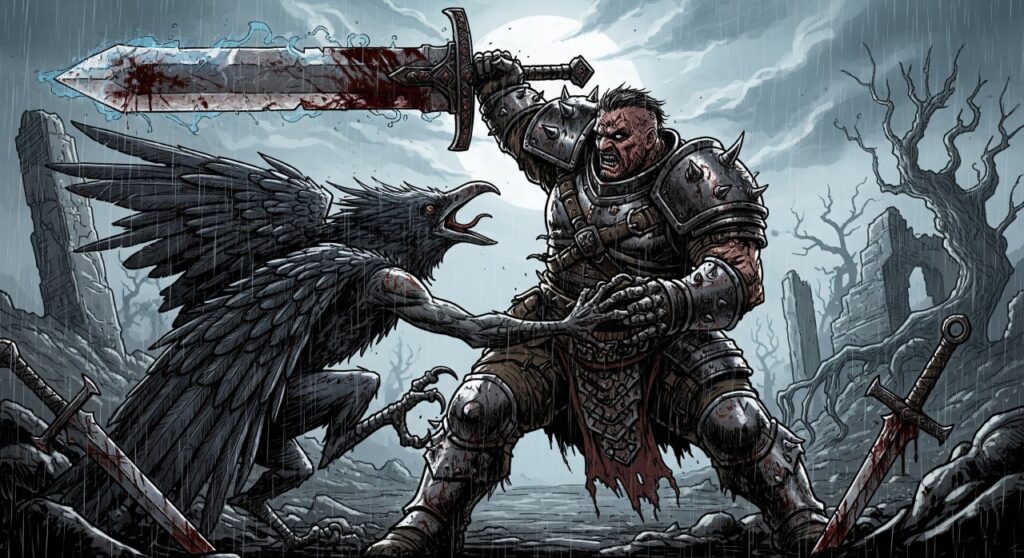
Tone and Themes: Whimsy Meets Doom
One of Shadow of the Weird Wizard‘s most striking features is its tonal versatility. While many dark fantasy games skew grim and nihilistic, SotWW embraces both hope and horror, allowing groups to tailor the experience.
Think of it as Labyrinth meets The Witcher—a world where danger and beauty coexist, and where a single magical mishap might turn a town into toads or release a singing storm that whispers secrets.
The game’s flexibility means it can support:
- Fairy-tale questing
- Heroic fantasy with weird twists
- Surreal horror adventures
- Comedic dungeon crawls
This adaptability makes it ideal for GMs who like to customize tone, and for groups who enjoy switching between levity and danger.
Game Mastering and Tools
Schwalb Entertainment knows how to support GMs (called Sages), and Weird Wizard is no exception. The core rules include:
- Clear encounter-building guidance
- Random tables for towns, loot, events, and oddities
- Adventure seeds and modular threat mechanics
- Faction-based worldbuilding tools
There’s also a robust downtime system, helping to manage what happens between adventures—whether it’s crafting magical cheese or starting a guild.
SotWW’s GM materials excel at being both practical and inspiring, offering flexibility without over-complication.
In addition to the copious GM information included in this tome, Schwalb also published Secrets of the Weird Wizard—the primary RPG supplement made for Weird Wizard Sages.
Strengths
✅ Elegant, streamlined rules that remain tactically satisfying
✅ Creative, rich setting that mixes humor, horror, and mystery
✅ Fast character creation and meaningful advancement
✅ Flexible tone—supports lighthearted fun or serious drama
✅ Great for both short and long campaigns
✅ Extensive character path options with high replay value
Weaknesses
❌ Tone may be confusing for groups expecting either pure horror or pure comedy
❌ Some layout issues or terminology may require referencing rules mid-session
❌ Advanced character building could benefit from clearer cross-references or visual aids
Conclusion
Shadow of the Weird Wizard is an exceptional fantasy RPG that delivers a tight, narrative-driven experience wrapped in a world full of strangeness, charm, and danger. It retains the strengths of its predecessor—Shadow of the Demon Lord—while shedding some of its heaviest baggage, making it more accessible, creative, and flexible for a wider audience.
Whether you’re a veteran GM looking for a new sandbox or a new player seeking something offbeat but easy to learn, SotWW offers an ideal balance of tone, mechanics, and magic. It’s a love letter to classic fantasy—rewritten with sharp wit, dark heart, and a whole lot of weird.