
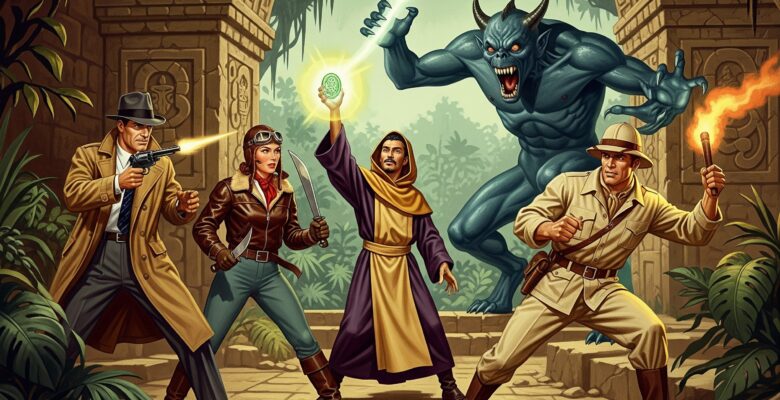
Pulp Cthulhu reimagines the core mechanics of Call of Cthulhu for a more action-packed, two-fisted style of play. Instead of fragile investigators barely surviving brushes with the Mythos, players take on the roles of hard-boiled detectives, masked vigilantes, daring adventurers, and tough explorers—characters who can stand up to eldritch horrors with grit, luck, and firepower. The book doesn’t replace Call of Cthulhu; it reshapes it, offering an alternate lens for running games inspired by 1930s and 1940s pulp magazines, radio serials, and classic adventure films.
🧭 What’s Inside
Pulp Cthulhu provides a robust toolkit to transform a standard CoC game into a pulp adventure setting:
- Character Creation Overhaul: Archetypes such as Adventurer, Scientist, or Daredevil, designed for pulp-style heroes.
- New Mechanics: Luck spends, Talents (special abilities), and streamlined Sanity rules that make characters tougher but still vulnerable.
- Pulp Tone & Style Guides: Advice on running games that feel cinematic, adventurous, and larger-than-life.
- Campaign Frameworks: Detailed guidance for structuring pulp campaigns and balancing investigation with action.
- Adventures: Four ready-to-play scenarios showcase pulp play—fast-paced mysteries filled with danger, cultists, and Mythos beings.
⚔️ How It Plays at the Table
Where traditional Call of Cthulhu leans into fragility and dread, Pulp Cthulhu embraces momentum. Characters still face cosmic horror but have more tools to fight back.
- Luck as a Resource: Players can spend Luck to turn failures into successes—echoing pulp heroes’ improbable escapes.
- Talents Enhance Survivability: Abilities like “Tough Guy” or “Quick Healer” add pulp flair and durability.
- Action Over Caution: Gunfights, fistfights, and daring escapes happen more often. Investigations remain central but are punctuated by kinetic sequences.
- Cinematic Campaigns: Adventures are framed more like cliffhangers than slow-burn mysteries, creating an ongoing sense of high stakes.
At the table, this leads to stories that feel like a mix between Indiana Jones, The Shadow, and Call of Cthulhu. Players get to experience the Mythos with pulpy swagger while still risking madness or death.
🧰 Highlights
- Keeps the Mythos Core: Despite the pulp tone, the Cthulhu Mythos is still terrifying. The horrors remain overwhelming, even if heroes last longer.
- Flexible Toolkit: GMs can dial pulp intensity up or down, blending it with classic CoC for hybrid campaigns.
- Rich Adventure Material: The included scenarios provide an immediate demonstration of how pulp differs from traditional Call of Cthulhu play.
- Expanded Longevity: Tougher characters enable longer campaigns without constant replacement of investigators.
⚠️ Things to Watch
- Tone Shift: Some players may miss the bleak fragility of traditional CoC; pulp play creates a different atmosphere.
- Balance Considerations: Spending Luck and using Talents can make some challenges feel too easy if not managed carefully.
- Era Specificity: While adaptable, the pulp style leans heavily on a 1930s–40s aesthetic, which may not fit every group’s taste.
🧩 Place in the Chaosium Line
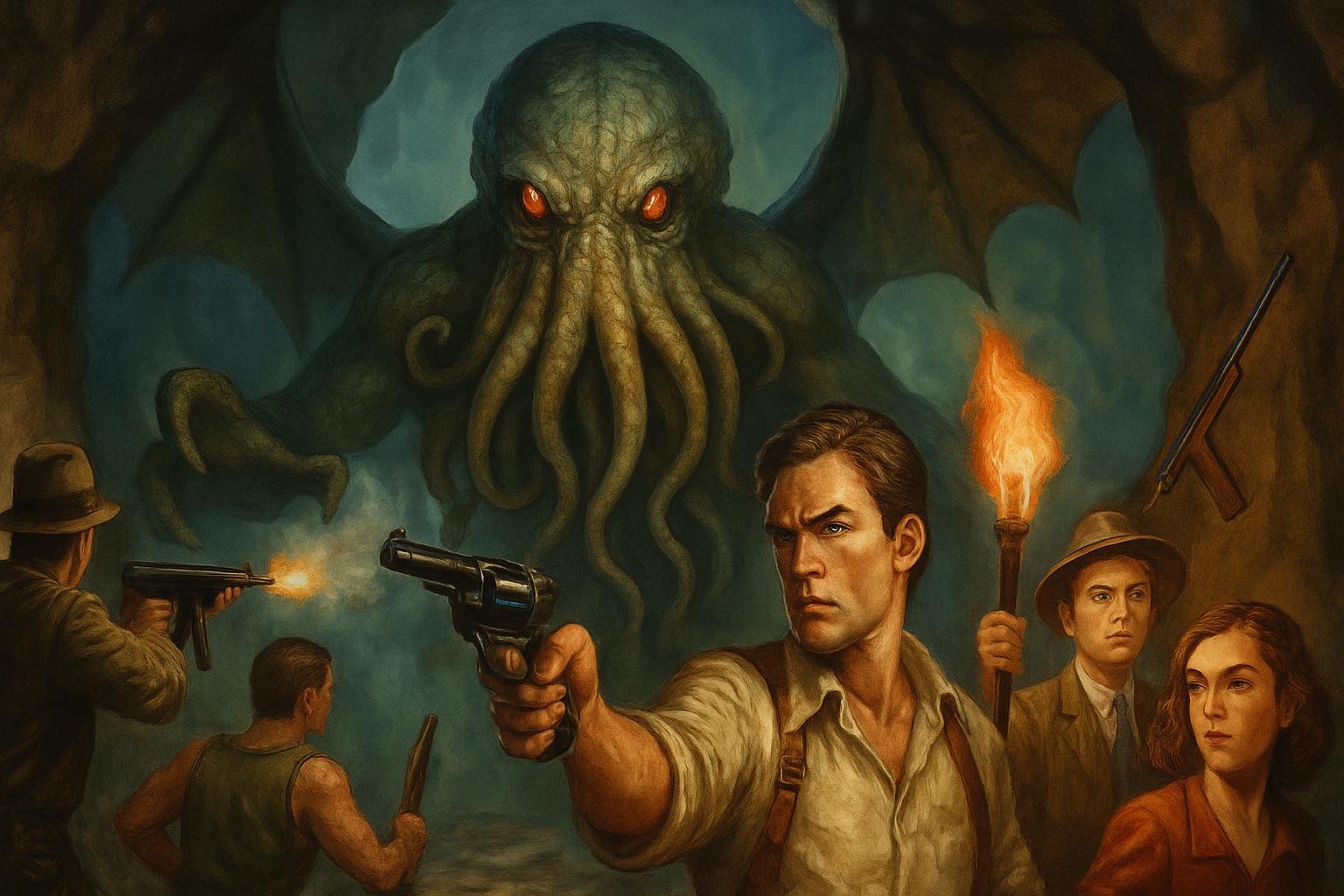
Pulp Cthulhu isn’t a replacement but a parallel mode of play for Chaosium‘s Call of Cthulhu 7e. It pairs particularly well with globe-trotting campaigns (The Two-Headed Serpent was written with Pulp Cthulhu in mind) and with Keepers who want a faster, more cinematic pace. It stands apart from supplements like Down Darker Trails (Western Mythos) or Masks of Nyarlathotep (classic campaign) by leaning into action-forward design.
🏆 Final Verdict
Pulp Cthulhu is an essential supplement for Keepers and players who want to experience the Mythos through a lens of action, grit, and cinematic flair. It doesn’t dilute the horror—it reframes it, allowing heroes to battle longer, fall harder, and take part in stories that feel both thrilling and terrifying. For groups who love both Lovecraft and Indiana Jones, it’s a perfect fusion that expands what Call of Cthulhu can be.