Dolmenwood transforms classic Old-School Essentials (OSE) into a haunting, whimsical campaign setting rooted in British folk horror. Designed by Gavin Norman and released through Necrotic Gnome, the three-volume system—Player’s Book, Campaign Book, and Monster Book—delivers a complete, self-contained RPG rich in tone, magic, and exploration. Here’s how it all comes together.
🧙 Dolmenwood Player’s Book
What’s Inside
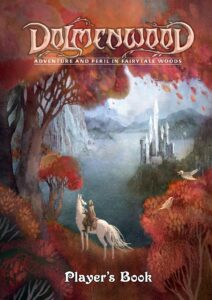
This foundational volume provides the core rules, character options, and procedural guidelines for play. It includes:
- Six kindreds: goat-headed breggles, starry-eyed elves, grimalkin cat-fairies, humans, mosslings, and woodgrues.
- Nine classes: including bard, cleric, enchanter, hunter, knight, magician, thief, fighter, and friar.
- Four types of magic: arcane, fairy glamorous, clerical prayers, and mosslings’ knacks.
- New gear, tavern fare, horses, dogs, pipeleafs, herbs, and fungi.
- Procedures for travel, camping, foraging, encounters, dungeon delving, downtime, and combat—all integrated with setting tone and shortcuts for new OSR players.
Strengths
- Acts as a standalone rules engine, gently guiding new players and OSE novices through play procedures, die notation, and combat resolution via examples and glossary entries.
- The classes and kindreds are richly flavored and tied to Dolmenwood’s weird fairy folklore.
- The presentation is clear and accessible, blending a classic OSR framework with modern usability.
Considerations
- While heavily inspired by B/X D&D, the system includes minor tweaks like ascending AC and simplified saving throws to reduce friction for new players.
- Some veteran players may find the mechanics traditional—but that familiarity supports accessibility in a richly weird setting.
🗺️ Dolmenwood Campaign Book
What’s Inside
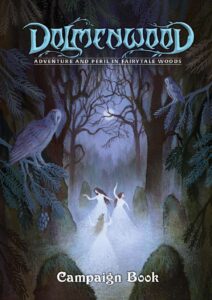
This core setting guide doubles as a sandbox GM engine:
- A dense hex-by-hex gazetteer, with approximately 200 hexes detailing NPCs, adventure hooks, and key sites.
- A richly interlinked ecosystem of seven major factions: the Duchy of Brackenwold, the Pluritine Church, the fairy Cold Prince, the druidic Drune, the breggle nobility, witches, and the trickster Nag-Lord.
- Greater mechanical context for weather, travel, getting lost, foraging, hunting, fishing, and downtime.
- Hundreds of magical artifacts, lore items, enchanted fungi, holy relics, and oddments.
- A full starter adventure to plunge players into Dolmenwood’s mystique.
Strengths
- The cross-referenced PDF and hyperlinking eliminate GM page‑flipping: a great boon for session agility.
- Interconnected faction dynamics and adventure seeds keep sandbox campaigns alive and improvised with minimal prep.
- New GM-friendly advice, example play sections, and clarity on OSR expectations help facilitate new referees, especially those less experienced with sandbox play.
Considerations
- The sheer density of material can be overwhelming at first—there’s a lot to digest.
- Readers should expect to dig into lore; this book serves GMs who run living, reactive worlds, not tightly scripted modules.
👾 Dolmenwood Monster Book
What’s Inside
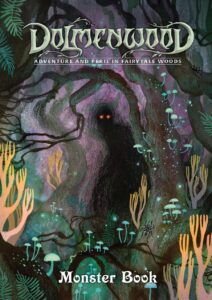
This bestiary brings Dolmenwood’s peculiar creatures to life:
- 87 fully detailed monsters (e.g. hungry fungi-folk, gobbles, gelatinous apes) with unique mechanics and encounter seeds.
- 53 types of mundane fauna and “folk” statistics: merchants, anglers, lost souls, villagers, pilgrims, fortune-tellers + more.
- 27 adventuring NPC stat blocks for quick inclusion.
- A party-driven adventuring generator: random NPC adventurers embark on quests and interact with the players.
- Over 300 rumors, in‑setting tales told around campfires, to seed curiosity and investigation.
- Monster‑creation guidelines for custom creatures in Dolmenwood’s folk‑horror tone
Strengths
- A rich bestiary rooted in folklore and fungus-themed weirdness.
- Encounter hooks and rumors designed to integrate storytelling seamlessly.
- High value: the Monster Book is nearly as essential as the Campaign Book for fantasy and mystery-driven play.
Considerations
- Limited art compared to big-budget settings; however, evocative descriptions offset the lack of visuals.
- Some players expect more generic fantasy monsters; these lean eerie and personal—perfect if you embrace the tone.
🧠 Setting & Style
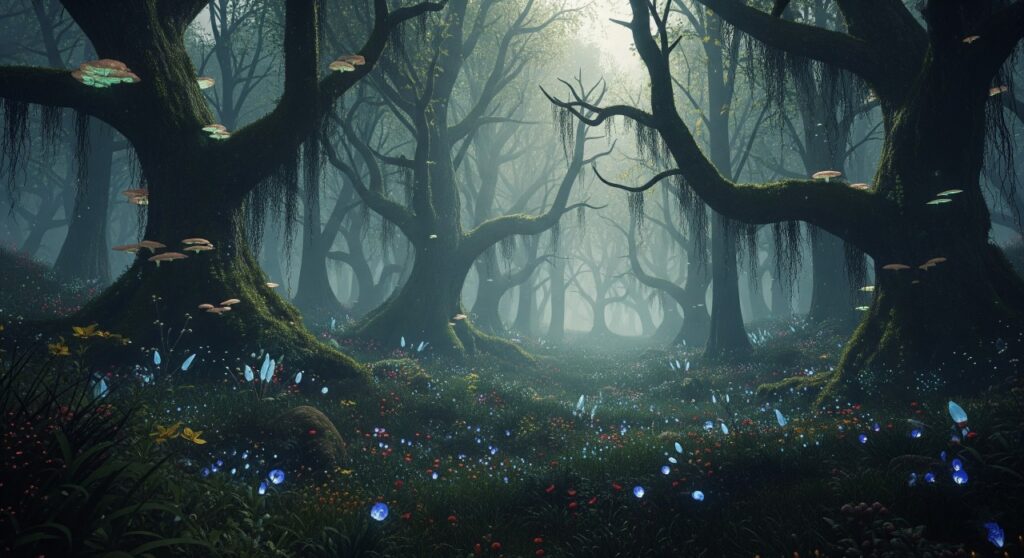
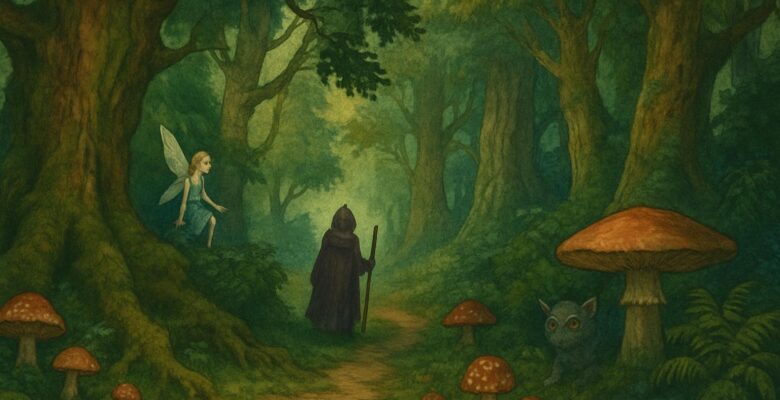
Dolmenwood invents a fairy‑tale OSR world blending whimsy and menace. Influences include The King of Elfland’s Daughter, Jonathan Strange & Mr Norrell, and Stardust—infused with fungal ecology, moss-covered ruins, and creeping folklore. Elves once ruled openly but now lurk at edges; ley-lines, standing stones, and wood gods thread the setting with myth. Factions like the Drune (mysterious magic users) and Atanuwë (chaos agents) ensure political and supernatural tension is never far off.
Dolmenwood is deadly, but tempered: friars gain healing early, and healing herbs and magical fungi can salvage dire situations. The setting encourages a cautious, investigative style of play that rewards exploration more than optimization.
✅ Strengths Summary
- Deep setting detail with factional interplay, folklore, oddities, and hex-by-hex locations.
- Honest OSR design using a familiar system (OSE/OSE B/X), streamlined and modernized.
- Player and GM materials feel integrated across the three books.
- Encourages sandbox play: factions react to character actions, rumors proliferate organically, and hex entries are adventure-ready.
- Accessible to beginners while providing layers of mystery and complexity for experienced players.
⚠️ Limitations
- Dungeon Masters face a steep learning curve when tackling dense lore and faction dynamics.
- Minimal art, especially in interior pages—focus is on text and functionality.
- Requires all three books for full functionality; the Player’s Book alone is not sufficient for GMs or world-context.
- Some players seeking high magic or cinematic adventuring may find it more low-key than mainstream fantasy settings.
🧭 Final Verdict
Dolmenwood is one of the most accomplished new fantasy settings of recent years. Combining OSR nostalgia with gothic fairy‑tale weirdness, it rewards careful exploration, sucker‑punch plot hooks, and slow-burning intrigue. The Player’s Book, Campaign Book, and Monster Book form a cohesive trilogy that offers a complete, lush sandbox experience—ideal for groups who want magical realism, fungal oddities, and wonder‑tinged horror.