
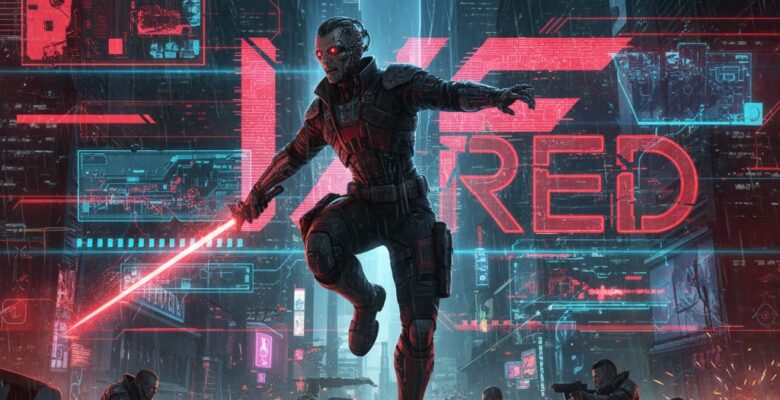
Interface RED is a quietly effective line: short, focused books that compile the publisher’s free DLC articles and new micro-rules into compact, playable supplements for Cyberpunk RED. Across four volumes, R. Talsorian Games turns a scatter of web extras into durable printed tools — NPCs, locations, new mechanics, drug lists, martial arts, drones, and scenarios — that expand play without demanding a full-blown sourcebook. For GMs who want modular, plug-in options to flavor Night City and the Time of the Red, the series punches well above its weight.
Volume 1 | Volume 2 | Volume 3 | Volume 4
📦 What Interface RED is (series concept)
Each Interface RED volume gathers a set of shorter articles — many of which first appeared as free DLC on R. Talsorian’s site — and packages them with at least one exclusive piece of new content. The result is a grab-bag anthology of rules additions (gear, drugs, NPC archetypes), locale writeups, small adventures (“Screamsheets”), and player options intended to be dropped straight into ongoing RED campaigns. The books are deliberately narrow in scope: they don’t replace the core book; they augment it with practical bits you’ll actually use.
🧾 Volume 1 — Drones, tools, and starter articles
Volume 1 collected the early DLC that leaned on tools and small comforts for running RED: drone rules and profiles, miscellaneous gear, a handful of compact handouts and scenario seeds, and one fresh article exclusive to the printed volume. It’s a useful “starter pack” of utilities for GMs who want modern bits — mechanized helpers, quick tech — without a heavy read. If your table enjoys gadgetry, this first volume is the obvious pickup.
🐾 Volume 2 — Hardened opponents and more lethal toys
Volume 2 continued the pattern but skewed harder: tougher mooks and lieutenants, monsters and encounter upgrades, plus play aids to make combat and tactical runs feel grimmer. The volume also includes one or two exclusive items/articles that extend the base rules in small but interesting ways (new NPC classes or device lists). For groups running hack-and-shoot campaigns, Volume 2 supplies immediate adversaries that fit RED’s lethal tone.
🧭 Volume 3 — Locations, activities, and short adventures
By Volume 3 the series leaned more into location writing and color: new districts, mini-locations, activities and side-adventures to drop into any session, plus scenario seeds that are ideal for one-shots or for fleshing out a downtime week in Night City. If you’ve ever wanted a quick, gritty locale with a stat block and complication already written, this volume makes it easy — and it’s great for convention or one-shot play because prep time is tiny.
🥊 Volume 4 — Drugs, martial arts, and updated content
Volume 4 is the most ambitious to date. It compiles DLC on pharmaceuticals and illicit chemistry (Hornet’s Pharmacy), provides dozens of martial-arts styles and fight options (the Cyberfists of Fury material), and bundles a raft of smaller articles: tailored NPCs, updated drones and vehicles, and scenario sparks. RTG has noted that Volume 4 was updated and re-uploaded in 2025, and that physical prints were planned following the digital release — an indication the line remains active and supported. For groups wanting crunchy, tactical melee options and a toolkit around drugs and street pharmacology, Volume 4 is the standout.
🔮 How these volumes perform at the table
- Plug-and-play: The real strength of Interface RED is immediacy. Articles are short, concrete, and designed to be slotted in between sessions. GMs can grab a martial art from Vol.4, a drone from Vol.1, and a hardened lieutenant from Vol.2 and have a coherent encounter in minutes.
- Tone-matched: All volumes respect RED’s gritty, lethal tone. New content doesn’t sugarcoat consequences — drugs have side effects, martial arts have tradeoffs, and harder mooks are dangerous. That preserves a sense of risk rather than power-inflation.
- Not a rules expansion: These books are additive, not transformative. If you want comprehensive new systems or a massive setting book, Interface RED won’t deliver that. Think of them as toolboxes, not textbooks.
✨ Highlights & standout pieces
- Drones and gear (Vol.1): Practical and usable — a quick way to populate a scene with tech variety.
- Hardened mooks (Vol.2): Bite-sized opponent packs that scale up threat without rewriting combat math.
- Mini-locations & Screamsheets (Vol.3): Perfect for convention tables and improvisational GMs.
- Hornet’s Pharmacy & Cyberfists (Vol.4): A big boon for groups that want weird drugs and a broader palette of hand-to-hand styles. The martial-arts material is the most content-dense single addition across the series.
⚠️ Caveats & who should buy
- Collectors vs. casuals: If you already downloaded the DLC from RTG’s website, the printed volumes are less essential — they largely collect previously free content. But if you prefer consolidated print/PDFs (or want the exclusive articles), they’re worth the shelf space.
- Not campaign-changing: Expect short expansions and scenario sparks, not a paradigm shift in play. Buy these to enhance sessions, not to rebuild your campaign around them.
- Patch/update posture: RTG has updated volumes post-release (notably Vol.4 in 2025), so expect revisions; check DriveThruRPG listings to ensure you have the latest build.
🧭 Final thoughts
Interface RED is a pragmatic series: sensible, modular, and tuned to the needs of busy GMs who want immediate, canon-friendly content for Cyberpunk RED. Volumes 1–3 establish a pattern — collect DLC, add one exclusive piece, print — and Volume 4 shows the line can deliver genuinely substantive additions (drugs and a huge martial-arts suite). If you run RED regularly and enjoy adding color and mechanical spice without long prep, this series is an efficient way to do it. For completists and active GMs, pick up the volumes as they’re released; for casual players, cherry-pick the PDFs that match your group’s interests.