
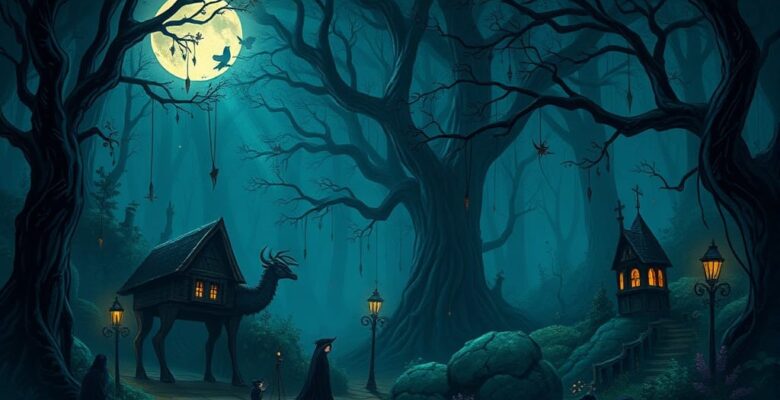
We Are All Mad Here is a Cypher System supplement and setting book by Monte Cook Games, published in September 2020. Authored by Shanna Germain, the book explores fairy tales, folkloric archetypes, and the notion of “madness” as both metaphor and literal story mechanic. You need the Cypher System Rulebook to play.
Its aim is two-fold: provide tools for GMs to build fairy tale-flavored adventures or campaigns, and offer a ready setting (the Heartwood) that weaves fairy tale motifs with sensitive treatment of mental health.
📚 Contents & Tools
According to the Monte Cook Games product page and reviews, here’s what We Are All Mad Here provides:
- A deep treatment of the fairy tale genre: What makes a fairy tale distinct, how to use tropes and avoid clichés, how to incorporate archetypes, and how to cross genres (e.g. modern, myth, folklore, urban legends).
- Character creation options specific to this setting: new descriptors/foci tied to fairy tale character types. Examples include Frumious Princess, Fragmented Knight, Bewitched Woodcutter, among others.
- Fairy tale creatures, archetypes, and named/unnamed characters: both familiar and new. This includes creatures of “real dark woods” and beings drawn from classic tales, rearranged or reinterpreted.
- The Heartwood: A complete setting. In this realm, “madness” has literal and metaphorical expression. Characters touched by mental health issues may access the Heartwood where their “otherness” becomes part of the magic and story. The text includes ways to model mental health sensitively.
- Adventures and Story Seeds: Three full-length adventures for use in Heartwood or in other settings, plus two “Cypher Shorts.” The package also includes an index of fairy tale elements for easy reference.
🎭 Tone, Themes & Sensitive Material
One of the standout features of We Are All Mad Here is its handling of mental health and “madness” as part of its narrative DNA, not just as a metaphor. Characters who in “real world” terms are neurodivergent, or live with illness, trauma, or loss, are represented in the setting as being capable of great magic when they enter the Heartwood. This is done with care: setting-specific descriptor/foci options, character arcs (e.g., “Develop Coping Strategies”, “Become an Advocate”, etc.).
The tone balances whimsy, wonder, and a kind of strange beauty, with darker corners (woods, shadows, betrayal, loss) so the fairy tale texture is not saccharine but rich and textured. Many reviews praise its aesthetic: evocative art, strong layout, and a feeling of stepping into fairy tales where magic is at once dangerous and healing.
✨ Strengths — What We Are All Mad Here Does Really Well
- Genre clarity & inspiration: For anyone wanting to run fairy tale or folklore-driven games, this book gives both guidance and rich material. If you want to do something like Alice in Wonderland-meets-folklore or Pan’s Labyrinth style, this setting gives you flexible tools.
- Character identity & representation: The way mental health is handled—characters touched by it, descriptor/foci options, narrative arcs, and using “madness” as part of the story rather than a simple handicap—is relatively rare in RPGs and handled with sensitivity here.
- Beautiful production & evocative art: Layout, art, margin notes, sidebars, and evocative illustrations are frequently praised. The book supports its theme visually as well as textually.
- Useful indexing & modularity: The index of fairy tale elements, cyphers, mechanics, etc., makes it reasonably easy to find what you want; you can extract bits (creatures, adventures, arcs) for use in other settings.
⚠ Things to Watch — Weaknesses & Limitations
- Campaign scope decision: If your group does not want any aspect of mental health or “madness” themes, or prefers lighter fantasy, some of the material may feel uncomfortable or heavy. The setting doesn’t shy away from dark emotional material. GMs should discuss boundaries.
- Power & balance of descriptors/foci: As with many supplements, some new descriptor/foci combinations may be more useful or mechanically advantageous than others depending on play style. Depending on your campaign, you may need to adjust or house-rule some things.
- Genre blending challenge: The book gives advice, but blending the fairy tale style (wondrous, strange, archetypal) with serious emotional themes (mental health, trauma) is tricky. It demands careful maintaining of tone. Some tables may struggle to maintain the balance between whimsy and weight.
- Not stand-alone: As with all these Cypher Genre Books, you need the core system. Also, if you want to adapt this material to other systems, conversion will require effort.
🗡 Final Verdict

We Are All Mad Here is a standout among Cypher System genre books. It does more than just provide fairy tale content—it interweaves identity, emotional weight, and archetype with mythic magic in ways that feel meaningful as well as fun. If you’re drawn to stories that explore inner sorrows, wonder, transformation, and folk magic, this book gives a toolkit with depth, flexibility, and beauty.
It’s especially recommended for gaming groups comfortable with exploring mental health, metaphor, myth, and wondering what happens when fairy tales are not only stories but mirrors of internal truths. For groups wanting something lighter or purely heroic, there’s still a lot here to mine (creatures, cyphers, adventure structure), but some content may be more than needed.