In a world where dragons run corporations, hackers invade the Matrix, and shamans summon spirits on the streets of Seattle, Shadowrun carved a unique legacy in tabletop roleplaying. First released in 1989 by FASA Corporation, Shadowrun merged cyberpunk dystopia with fantasy tropes—a combination that shouldn’t have worked, but somehow did.
Now published by Catalyst Game Labs, Shadowrun is in its 6th Edition, known as Shadowrun: Sixth World, released in 2019. The game continues to blend noir storytelling, digital espionage, and street-level action in a world where orks and elves hack megacorporations while avoiding drone patrols and astral surveillance.
Setting: The Sixth World
The heart of Shadowrun is its setting, the “Sixth World,” a dystopian future where:
- Magic returned in 2011 with the Awakening.
- Metahumans (elves, dwarves, trolls, orks) emerged, changing the face of society.
- Corporations overtook governments, forming the Corporate Court and gaining extraterritorial sovereignty.
- Technology surged forward, ushering in Matrix-based VR, cybernetic implants, AI, and augmented reality overlays.
- Shadows run deep: deniable assets (called shadowrunners) take on illegal missions for creds, revenge, or survival.
It’s a world of contradictions—high-tech and primal, ancient spirits and AI overlords, magical traditions and corporate dogma. This duality fuels rich storytelling, where runners juggle urban warfare, complex heists, and political intrigue.
Core Gameplay Loop
Shadowrun campaigns typically revolve around heists, espionage, sabotage, or extraction jobs performed by a team of runners hired by shadowy fixers, Johnsons (middlemen), or megacorps.
Every run plays like a cyberpunk Oceans 11, featuring:
- Planning (legwork, surveillance, magical scouting),
- Execution (infiltration, hacking, combat),
- Escape (and sometimes betrayal).
Sessions blend tense tactical decision-making with personal roleplaying arcs, character growth, and loyalty conflicts. The runners exist outside society’s norms—criminals, misfits, revolutionaries—and every job pushes them deeper into the shadows.
Mechanics Overview (6th Edition)
🎲 Dice Pool System
Shadowrun uses a d6 dice pool mechanic:
- Roll a number of six-sided dice equal to Attribute + Skill.
- Each 5 or 6 is a hit (success).
- Opposed rolls and thresholds determine outcomes.
- Glitches occur if half or more of your dice roll a 1, even if the action technically succeeds—introducing complications.
This system is simple in theory, but character sheets can become dense, with numerous modifiers from cyberware, edge, magic, gear, and situational context.
Edge System (6e Highlight)
6th Edition introduced a revamped Edge system, a form of in-game currency used to:
- Reroll dice
- Add extra dice
- Activate special effects (e.g., ignore armor, disrupt spells)
Edge is awarded dynamically during gameplay when characters outmaneuver opponents or exploit tactical advantages. For example:
- Gaining high ground
- Using superior gear
- Exploiting enemy weaknesses
This is designed to make combat more cinematic, encouraging players to think creatively rather than just mechanically.
However, the Edge system received mixed reviews:
- Some praised its flexibility and flair.
- Others found the edge economy unintuitive, poorly balanced, and clunky in fast-paced scenes.
Character Creation and Archetypes
One of Shadowrun‘s strengths is the diversity of character concepts:
- Street Samurai: Gun-toting warriors with cyberware and blades.
- Deckers: Hackers who infiltrate the Matrix.
- Riggers: Vehicle and drone specialists.
- Faces: Social manipulators and con artists.
- Mages/Shamans: Full spellcasters tapping into astral forces.
- Adept: Martial artists using inner magic to enhance physical abilities.
- Technomancers: Magic-infused hackers who feel the Matrix.
Players build characters using priority tables or point-buy systems, customizing race, skills, attributes, resources, contacts, and lifestyle.
While the range of options is exciting, build complexity can be overwhelming for newcomers. Optimizing characters often requires deep system knowledge, and even veterans may turn to online tools or community guides.
Magic, Matrix, and Mayhem
Shadowrun juggles three parallel subsystems: physical combat, magic, and digital hacking.
✨ Magic
Magic users can:
- Cast spells
- Summon spirits
- Enter the astral plane
- Counterspell
The magic system has depth, with a risk-reward tradeoff (e.g., Drain, astral threats). Magical threats are as diverse as technomantic ones.
💻 Matrix
The Matrix is a virtual reality network used for communication, commerce, and control. Deckers and Technomancers manipulate it to:
- Hack security systems
- Disable drones
- Extract data
The Matrix operates with its own rules, though 6e tried to integrate Matrix actions more smoothly into regular combat turns. However, some critics still find it segregated and confusing, especially for GMs juggling simultaneous systems.
🚗 Riggers
Riggers use control rigs to interface with drones or vehicles, offering remote-control surveillance, combat drones, and getaways. Their gameplay is tactical but shares some of the same complexity issues as deckers.
Combat: Tactical and Deadly
Combat in Shadowrun is fast, lethal, and gear-intensive.
Weapons, armor, cyberware, and initiative-enhancing drugs all come into play. Characters can die quickly, especially if they miscalculate. Cover, concealment, smart tactics, and pre-run preparation are essential.
With 6e, combat aimed to speed up through simplified initiative, streamlined gear interactions, and the edge system—but many players still report a steep learning curve, especially for new GMs.
Art, Design, and Layout
Visually, Shadowrun continues to impress:
- The art captures a gritty, hyper-urban aesthetic, full of neon, chrome, and decay.
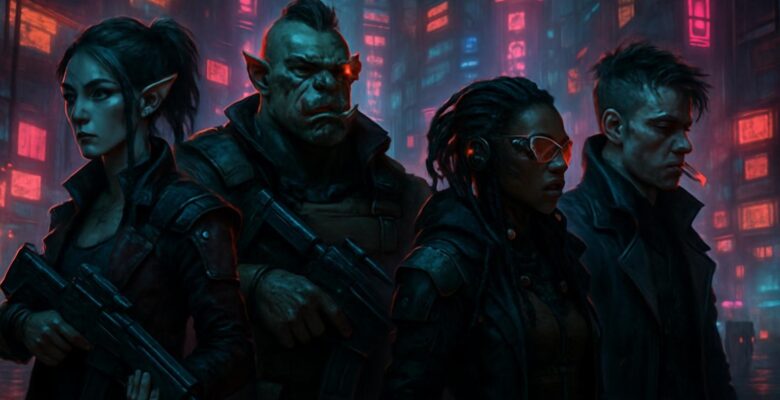
- The character designs are diverse, expressive, and genre-blending (think elf hackers with dreads, troll shamans with tribal tattoos, and dwarven drone pilots in punk jackets).
However, the layout and editing of rulebooks have long been a sore point. The 6th Edition core rulebook was notoriously rushed, with unclear organization, typos, and inconsistent mechanics that required multiple errata and FAQs to clarify.
Catalyst has since released companion books (Core Rulebook Revised, Seattle Edition, etc.), but new players still face a documentation gap unless they consult fan sites or curated guides.
Community and Support
Shadowrun boasts a passionate and long-standing fan base. Community-made tools, lore databases, and character builders are widely available. Forums like r/Shadowrun and Discord servers provide support, actual plays, and campaign ideas.
There are also numerous supplements:
- City sourcebooks (e.g., Seattle, Berlin, Neo-Tokyo)
- Campaign books
- Gear expansions
- Faction guides
Catalyst continues to support the line with updates, though they often trail community expectations in editing and rules clarity.
Strengths
- ✅ Deep, immersive setting that balances cyberpunk and fantasy like no other.
- ✅ Wide range of character options and narrative possibilities.
- ✅ Tactical depth in combat, hacking, and planning.
- ✅ Strong visual identity and artistic direction.
- ✅ Dedicated community with decades of material and shared experience.
Weaknesses
- ❌ Complex and often opaque mechanics, especially for hacking and magic.
- ❌ Poor documentation and editing in 6e rulebooks.
- ❌ Edge system is divisive—some love it, others ignore it.
- ❌ Steep learning curve for GMs and players alike.
- ❌ Requires buy-in to handle its layered systems.
Conclusion
Shadowrun remains a genre-defining experience—a unique cocktail of chrome and sorcery, neon and nightmares. While 6th Edition stumbles in execution, it still delivers rich world-building and narrative opportunity for groups willing to invest in the learning curve.
If you want a campaign where your ork street samurai protects a dragon’s dirty secret while your elven technomancer hacks a surveillance grid mid-heist, Shadowrun offers limitless creative potential.