
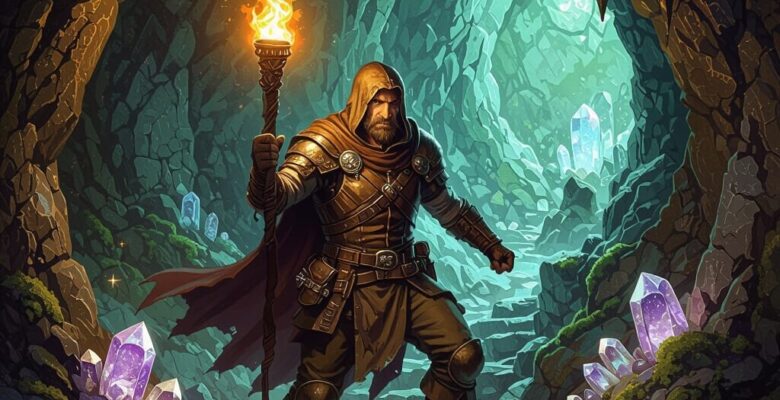
Knave: Second Edition (Knave 2E) is a fantasy RPG and world-building toolkit released by Questing Beast Games, authored by Ben Milton with artwork principally by Peter Mullen.
It is an OSR-styled, classless, rules-light game emphasizing exploration, dungeon delving, downtime, and modular subsystems. It publishes in an 80-page digest-sized hardcover and PDF.
Knave 2E’s design goals include: swift character creation, compatibility with classic OSR adventures/monsters/spellbooks; robust random tools (tables) for GM use; and modular subsystems (alchemy, magic, relics, etc.).
⚙️ Core Mechanics & Character Systems
Here are the mechanics and character‐structure features that define Knave 2E and distinguish it:
- Classless & Archetype-Flexible Design: Characters are not bound by “classes” in a traditional sense. You pick archetypes or “careers” (two at start) which grant gear and equipment; your effectiveness with weapon/armor/spells depends largely on your ability scores and which equipment you carry. Any PC can cast spells, use miracles, or equip armor/weapons, insofar as their stats permit.
- Abilities & Scaling: Ability scores (named similarly to classic D&D: Strength, Intelligence, Wisdom, Charisma, etc.) are on a 0-10 scale. Armor, difficulty ratings, etc., operate in the same scale, aiming for compatibility with older OSR modules and monsters.
- Slot-based Inventory & Wound Mechanics: You have a certain number of “item slots,” which define how much gear you can carry. Armour Pieces grant Armor Points (AP), modifying AC in a straightforward way. When you take damage beyond HP, wounds begin to fill item slots; once slots are filled, you may be forced to drop gear. Direct damage bypasses HP and hits slots immediately. This makes resource management meaningful.
- Hazard Die System: A single d6 “Hazard Die” is used to model many ongoing threats and resource drains—weather, torch burn, fatigue, depletion of resources, etc.—so that downtime, time passage, and environmental challenge are built into the core game flow.
- Magic, Relics, Divine Powers, Alchemy: Knave 2E offers a utility-focused magic system with ~100 level-less spells. It includes a spell generator for randomized chaotic magic. There is also a relic-driven divine magic system (missions + blessings), plus an alchemy system to hunt monsters for special traits and refine into potions.
🎯 GM Toolkit, Random Tables & Modular Subsystems
One of the biggest selling points of Knave 2E is how strong its GM tools are:
- The book includes 75+ d100 tables covering dungeons, monsters, spells, items, NPCs, factions, overworld, cities, etc. These are useful both for spontaneous generation and for creative inspiration.
- Modular subsystems are included for downtime (carousing, gambling, establishing bases or hirelings), potion making, relic missions, alchemy, and even tactical mass warfare in brief form.
- The layout includes a “control panel” style that tries to keep frequently referenced material easily accessible (two-page spreads, quick ref, etc.). Physical print reviews note it’s digest size (≈5.83×8.78 in) which aids portability.
✨ What Knave 2E Excels At
- Old-School Compatibility & Conversion: Because of its design, many older adventures, monsters, spells, even magic items from OSR / AD&D / BX etc., can be used with minimal conversion, especially since ability scores, armor, and difficulty are on familiar scales. This gives GMs a large pool of content to pull from.
- Resource & Risk Management Feel: The slot system, wound mechanics, hazard die, etc., combine to make adventuring dangerous and meaningful. Carrying loot, risking gear, navigating dungeons with diminishing supplies—all of that plays into decisions players make more than many OSR games.
- Random-/Tool-Heavy Inspiration: The huge number of random tables is both impressive and useful. For GMs who enjoy improvisation, or for solo play, or for generating campaign hooks, the tables are a gold-mine. Many reviewers praise them.
- Strong Physical Production & Style: The artwork (Peter Mullen), digest-size format, sewn binding, and layout style are praised for being attractive and usable in session. The binding and art get frequent positive mentions.
⚠ Trade-Offs & Criticisms
Knave 2E is not perfect, and several aspects receive critique:
- Deadliness / Harshness: Some players find the Hazard Die too punishing, the wound/item-slot mechanics harsh (losing gear due to wounds), the scarcity of resources making survival tough. Combat especially can feel brutal.
- Random Tables: Blessing or Overload? While many love the tables, others feel they are overloaded or not always inspiring. Some entries are generic or feel “padding” rather than content with real direction. For some GMs, using these effectively requires discernment.
- Balance & Ability Utility Critiques: A few reviews note that certain ability scores (e.g. DEX) may feel less impactful in certain builds, especially when compared to CON or intelligence. Because damage is capped (via limited dice sizes) and many threats bypass HP or cause equipment loss, builds can feel fragile or limited.
- Print Pricing / Perceived Value: Some backers feel the price tag for print or premium editions feels steep compared to content density, especially versus other OSR books with more page count. The premium edition adds special binding and finishes, but content is the same.
🧭 Knave 2E Target Customers
If you are…
- A GM who likes adapting classic OSR content, adventures, and modules with minimal conversion.
- Players who enjoy high risk, limited resources, and “punishment when unprepared” style fantasy play.
- People who want strong tools for improvisation—random generation, ambient world-building.
- Solo or small-group (2-3 players) tables—Knave’s systems shine in that environment.
It might be less ideal if:
- You prefer heroic fantasy with fast recovery, abundant resources, and less threat of gear loss.
- You want high mechanical granularity in combat (fine modifiers, feats, skill trees).
- You dislike randomness overload or want tightly scripted adventures rather than emergent, sandbox-style worlds.
🗡 Final Verdict
Knave: Second Edition is a worthy evolution of the original Knave, sharply tuned for OSR fans who want a rules toolkit that emphasizes risk, survival, resource management, modular systems, and flexible world-building. It balances elegance of design (i.e. mechanics that are simple but with meaningful trade-offs) with a strong GM-toolkit that encourages improvisation.
It’s not for every table—its harshness, danger, and reliance on randomness and improvisation mean that it demands a certain mindset: one where danger is real, where losing your gear or failing a task has weight, where exploration and foraging matter. If you and your group are ready for that, Knave 2E delivers much more than a retro-pastiche—it feels alive, dangerous, and full of emergent possibility.
For OSR veterans or newcomers with a taste for gritty fantasy and tools-rich play, this is one of the stronger recent entries in the field.