
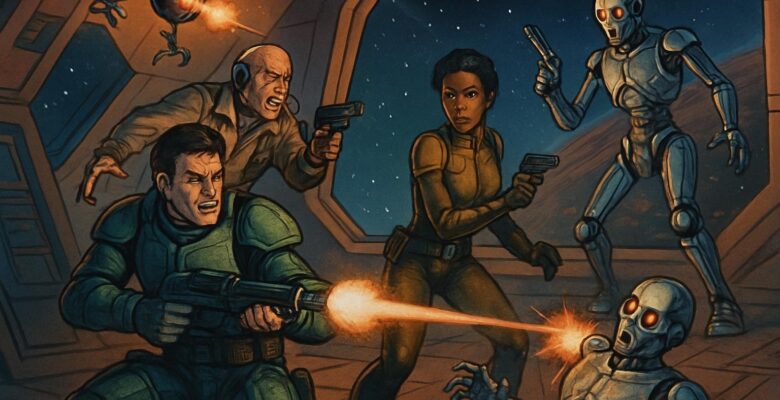
GURPS, the Generic Universal RolePlaying System, is a tabletop RPG published by Steve Jackson Games, first released in 1986. As the name suggests, GURPS is not tied to any single genre, setting, or play style. Instead, it provides a flexible and detailed set of mechanics that can be applied to any story you can imagine—from gritty post-apocalyptic survival, to pulpy space opera, to realistic historical drama.
GURPS is often described as a “toolkit RPG”, and for good reason: it’s a modular system built for GMs and players who enjoy building worlds, tweaking rules, and crafting bespoke campaigns tailored to their own vision. However, that flexibility comes at a cost—accessibility and complexity.
Core Concept and Philosophy
At its core, GURPS operates on a simple philosophy: realism, flexibility, and modularity. The base mechanics are universal and consistent, but the game includes a staggering number of optional rules, genre-specific tweaks, and supplements.
This makes GURPS a system that rewards tinkering, world-building, and player agency—but can also overwhelm groups used to more guided or streamlined experiences.
GURPS does not come with a built-in setting, which is both a blessing and a burden. Instead, it offers genre-specific sourcebooks (e.g., GURPS Fantasy, GURPS Space, GURPS Horror, GURPS Cyberpunk) that guide you in applying the core rules to a particular tone, tech level, or theme.
Mechanics Overview
🎲 3d6 Skill System
The foundation of GURPS gameplay is deceptively simple:
- Roll 3d6.
- You succeed if the total is equal to or less than your skill level.
- A roll of 3 or 4 is a critical success, and 17 or 18 is usually a critical failure.
This inverted roll-under system feels intuitive once learned and offers predictable probability curves (with a bell curve centered around 10-11), allowing for more consistent expectations than d20 systems.
⚙️ Point-Buy Character Creation
Characters are built with character points—a currency spent to buy:
- Attributes (Strength, Dexterity, Intelligence, Health)
- Skills (from Climbing to Computer Hacking)
- Advantages (e.g., Night Vision, Ambidexterity, Luck)
- Disadvantages (e.g., Bad Temper, Phobia, Enemy)
This approach is highly customizable. You can build:
- A blind psychic detective
- A mutant gunslinger
- A Napoleonic-era noble with a gambling addiction
The system encourages depth of character and mechanical reflection of narrative traits. However, optimization can become time-consuming, and characters with similar point totals can differ wildly in capability if not built thoughtfully.
Combat: Tactical and Realistic
Combat in GURPS is tactical, grounded, and unforgiving. Key features include:
- Hit locations (targeting eyes, limbs, vitals)
- Damage types (cutting, impaling, crushing)
- Active defenses (Dodge, Block, Parry)
- Shock penalties, bleeding, and crippling injuries
Combat is often lethal, even for experienced characters. A lucky shot or a failed defense roll can end a fight quickly. GURPS rewards planning, equipment choice, and real-world logic over fantasy-style heroics.
Optional rules (from GURPS Martial Arts, Tactical Shooting, and others) expand this even further, allowing for simulation-grade combat.
Magic, Psionics, and Powers
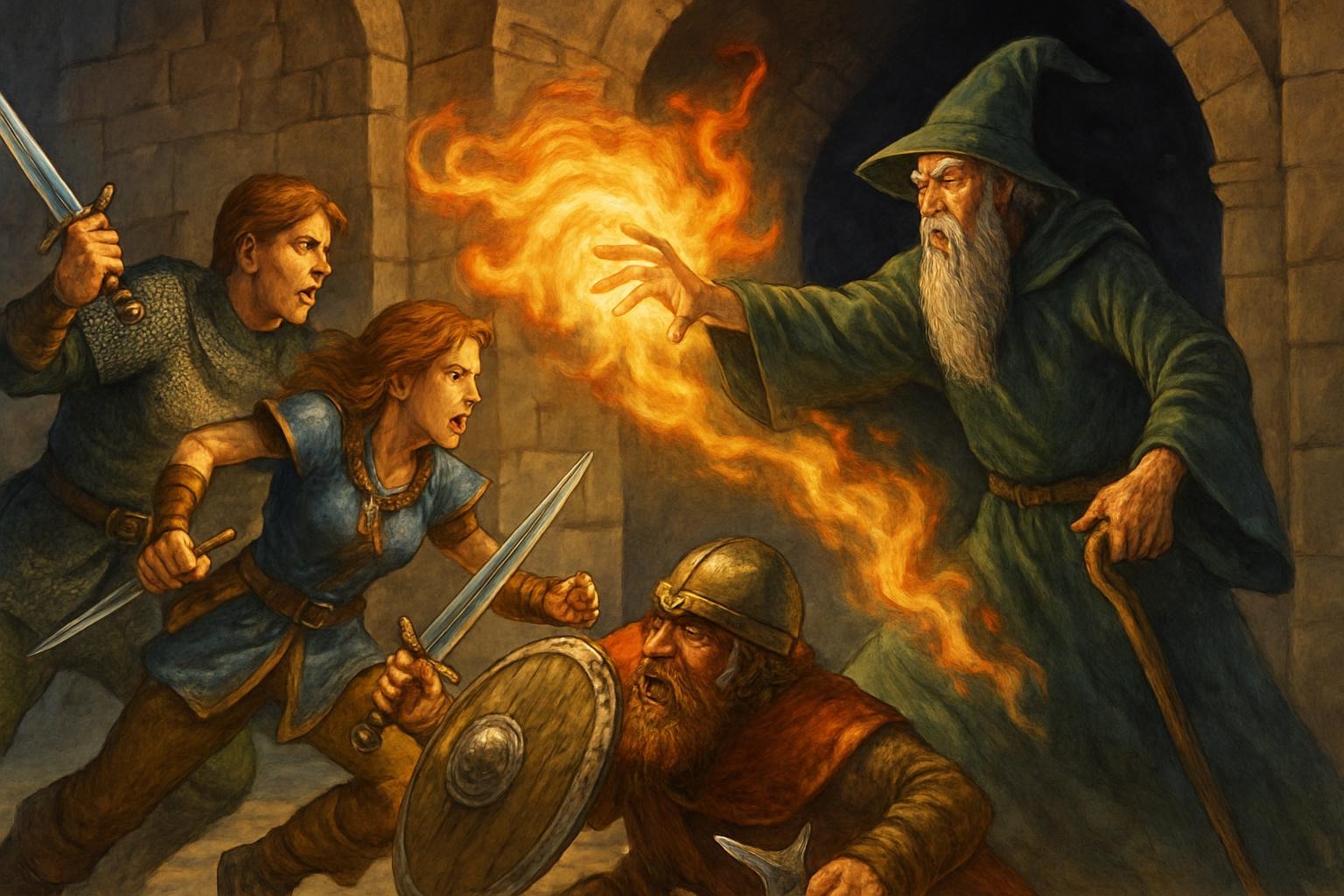
GURPS treats supernatural and sci-fi powers as systems within systems. Multiple options are available depending on tone and complexity:
- GURPS Magic: A classic fantasy magic system with hundreds of spells, organized into colleges (schools of magic).
- GURPS Powers: A toolkit to create superheroes, mutants, or magical abilities using a point-based framework.
- GURPS Psionics: Focuses on mental abilities like telepathy, precognition, or telekinesis.
These systems are balanced, customizable, and mechanically unified—but they do require investment to master.
Sourcebooks and Expansions
GURPS is arguably the most comprehensively supported RPG ever created in terms of breadth. The number of sourcebooks is staggering—many written with academic-level detail. Key titles include:
- GURPS Fantasy (world-building, races, magical societies)
- GURPS Space (galactic civilizations, FTL travel, alien biology)
- GURPS Horror (Lovecraftian monsters, fear checks, psychological horror)
- GURPS Bio-Tech, Ultra-Tech, Low-Tech, High-Tech (equipment, tech levels, futuristic gear)
These books are renowned for depth and utility, even for GMs running other systems. Many writers praise GURPS books as “system-agnostic research resources.”
4th Edition (Current Edition)
The current edition, GURPS 4th Edition, was released in 2004. It overhauled and streamlined much of the 3rd Edition’s sprawl, bringing greater consistency to mechanics and character creation. It remains the standard, with digital releases continuing under the GURPS PDF Challenge and GURPS On Demand initiatives.
However, new physical releases are infrequent, and the system’s niche popularity has limited mainstream uptake.
Strengths
- ✅ Unmatched flexibility: Any genre, any character, any tone—GURPS can do it.
- ✅ Consistent mechanics: Unified rules across genres make learning easier over time.
- ✅ Point-buy creation: Encourages nuanced and diverse characters.
- ✅ Tactical combat: Appeals to players who want realism and meaningful choices.
- ✅ Incredible sourcebooks: Rich, well-researched supplements that are useful beyond GURPS.
- ✅ Simulationist appeal: Excellent for modeling real-world logic in fantastical settings.
Weaknesses
- ❌ Steep learning curve: Especially for GMs and new players. Character creation can feel like building a machine.
- ❌ Slow combat: Tactical depth often comes at the expense of speed.
- ❌ Analysis paralysis: So many options can be overwhelming.
- ❌ Not plug-and-play: No built-in setting or default tone makes it hard for new groups to jump in.
- ❌ Documentation sprawl: Rules are scattered across many PDFs and sourcebooks. A centralized online reference would help.
Ideal Use Cases
GURPS excels in:
- Hard sci-fi campaigns with realistic physics and tech.
- Historical or alt-history settings (e.g., Rome, WW2, feudal Japan).
- Low-magic or modern horror where realism heightens tension.
- Custom settings where no off-the-shelf RPG fits the tone or scope.
- Mini-campaigns or one-shots where system mastery isn’t a barrier.
It may be less ideal for:
- Casual or first-time groups.
- Cinematic, rules-light play.
- Highly abstract or narrative-first storytelling.
Community and Tools
While smaller than D&D or Pathfinder, the GURPS community is dedicated, helpful, and long-standing. Resources include:
- The SJGames Forums and GURPS Discords.
- Fan sites like GURPSWiki and GURPS Character Assistant.
- Extensive PDF support via Warehouse 23 and DriveThruRPG.
Conclusion
GURPS is the Swiss Army knife of tabletop roleplaying games. It’s not flashy or beginner-friendly, but in the hands of the right GM and group, it is one of the most powerful and rewarding systems ever made.
Whether you want to run a gritty espionage thriller, a retrofuturist Mars campaign, or a magic-infused alternate history, GURPS gives you the tools to build it from the ground up—with precision.