
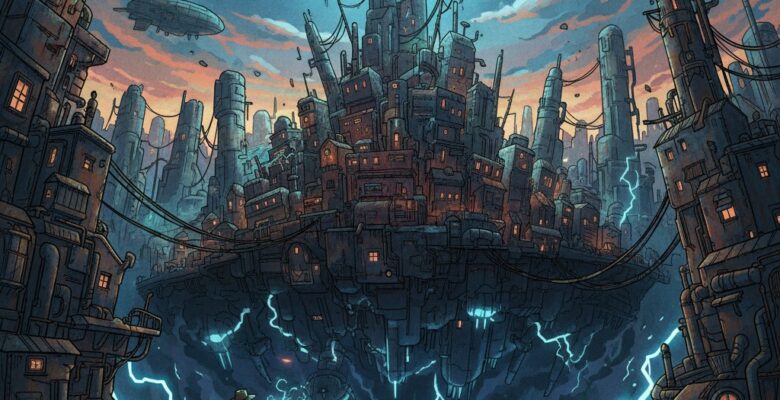
Electric Bastionland: Deeper into the Odd is a standalone role-playing game by Chris McDowall, released by Bastionland Press in 2020. It builds on the minimalist OSR sensibilities of Into the Odd, placing players in a bizarre, grim, electricity-tinged city known simply as Bastion, burdened by debt, weirdness, and strange transdimensional tunnels. Artwork throughout is by Alec Sorensen. The book is a physical hardback (336 pages) with a ribbon bookmark, spot-colored layout, plus a PDF.
A key premise: every character has a Failed Career (or background) and starts deeply in debt. Treasure, risk, and oddness are how you claw your way forward. The City (Bastion), its outskirts (Deep Country), and the subterranean/unreal tunnels (the Underground) form the main settings. To survive, players must navigate moral decay, bizarre machines, strangeness, and desperate choice.
📦 What’s Inside / Key Features
Here are the core contents and mechanical features based on official sources:
| Feature | Description |
|---|---|
| Pages & Physical Components | 336-page hardcover with a ribbon; spot-colored artwork; PDF included. |
| Rules System | Very simple core rules: the rules fit in a two-page spread. The mechanics are derived from Into the Odd, including “failed careers”, minimal stats (Strength, Dexterity, Charisma), no attack rolls, attack always hits and damage then is mitigated. |
| Failed Careers | Over 100 “Failed Careers” that define your past life and provide flavor, starting equipment, debt background, and hooks into game setting. These take up a substantial portion of the book. |
| Settings / Regions | Bastion (the city), Deep Country (the decayed rural spaces beyond Bastion), and the Underground (twisted tunnels beneath/through time/space). These provide varied play locales. |
| Art & Layout | Illustrations by Alec Sorensen; strong visual design with spot colour; art deco / noir-steampunk industrial flavour. The layout gives a heavy style that matches tone. |
| Conductor (GM) Resources | Guidance for running the game; essays, sample content, optional rules; tone, setting, advice. Also the “Oddendum” section: essays & miscellaneous content. |
🐾 How It Plays at the Table
Here’s what you can expect, in terms of play experience:
- Fast & lethal: Combat is dangerous. Because every attack hits, decisions, equipment choices, and damage mitigation matter a lot. Characters don’t have high margins for error.
- High flavour, low crunch: The rules are minimal; most of the book’s weight is in setting, failed careers, evocative NPC and locale details. This means GMs and players must lean into mood, tone, and improvisation.
- Variety of locales & tone: Sessions can shift from street-level crime, debt management, industrial oddity, to weird exploration of subterranean tunnels or Deep Country. The setting supports horror, strangeness, urban decay, moral ambiguity.
- Debt & desperation: The shared debt framing means there’s constant pressure—a lit fuse beneath action. Much of the drive is to pay off debts, avoid creditors, survive. This gives urgency to exploration and reward.
✨ Highlights
- Excellent world-building via “Failed Careers”: These careers aren’t just stats—they give flavour, narrative hooks, weird backstories, and pieces of Bastion’s lore. They inspire rather than constrain.
- Minimalist rules that work: The core rules are deceptively simple, but they manage to produce tense moments, especially in combat and exploration. The lack of “to hit” rolls, etc., streamlines play.
- Visual & aesthetic impact: Sorensen’s art + spot colours make the book feel like an object. Bastion feels distinct—as a place of shadows, electric lights, industry, decay, and odd machines.
- GM support & essays: The “Oddendum” and guidance for Bastion / Deep Country / Underground help referees flesh out the world and sessions with less prep.
⚠ Things to Watch
- Heavy GM responsibility: Because much of the setting is evocative rather than prescriptive, GMs will need to fill in gaps—map details, NPC motivations, threads of plot. If you prefer highly detailed prescriptive worlds, there may be an adjustment.
- Tone might be grim or disorienting: For groups that want heroic fantasy, certainty, or traditional class progression, Electric Bastionland can be unsettling. The debt framing, the strangeness, and stakes are high.
- Layout trade-offs: The high use of black, heavy visuals, spot color etc., is fantastic for mood but may be difficult for printing (toner, ink) or readability at some light levels. Some users note the printing cost and ink usage.
- No level progression / limited stat growth: The game doesn’t provide traditional experience or leveling; “advance by scars” or similar mechanics are lighter, meaning long campaigns may feel less mechanically dynamic for some groups.
🧭 Where It Fits & Who It’s For
Electric Bastionland is ideal for:
- Players & GMs who enjoy OSR-adjacent, weird fantasy / industrial horror.
- Groups that want strong setting mood and narrative flavour over mechanical complexity.
- One-shot or short-campaign play, especially with a focus on debt, exploration, weirdness, and challenge.
- Those who appreciate resource tension (equipment, damage, consequences) and aren’t overly reliant on progression / power-gaming.
It’s less suited for:
- Players who want lots of levels / power growth or detailed class systems.
- Tables that prefer light visuals, low printing cost, simple typography.
- Sessions focused on heroic high fantasy, moral clarity, or epic campaigns with guaranteed survivability.
⭐ Final Verdict
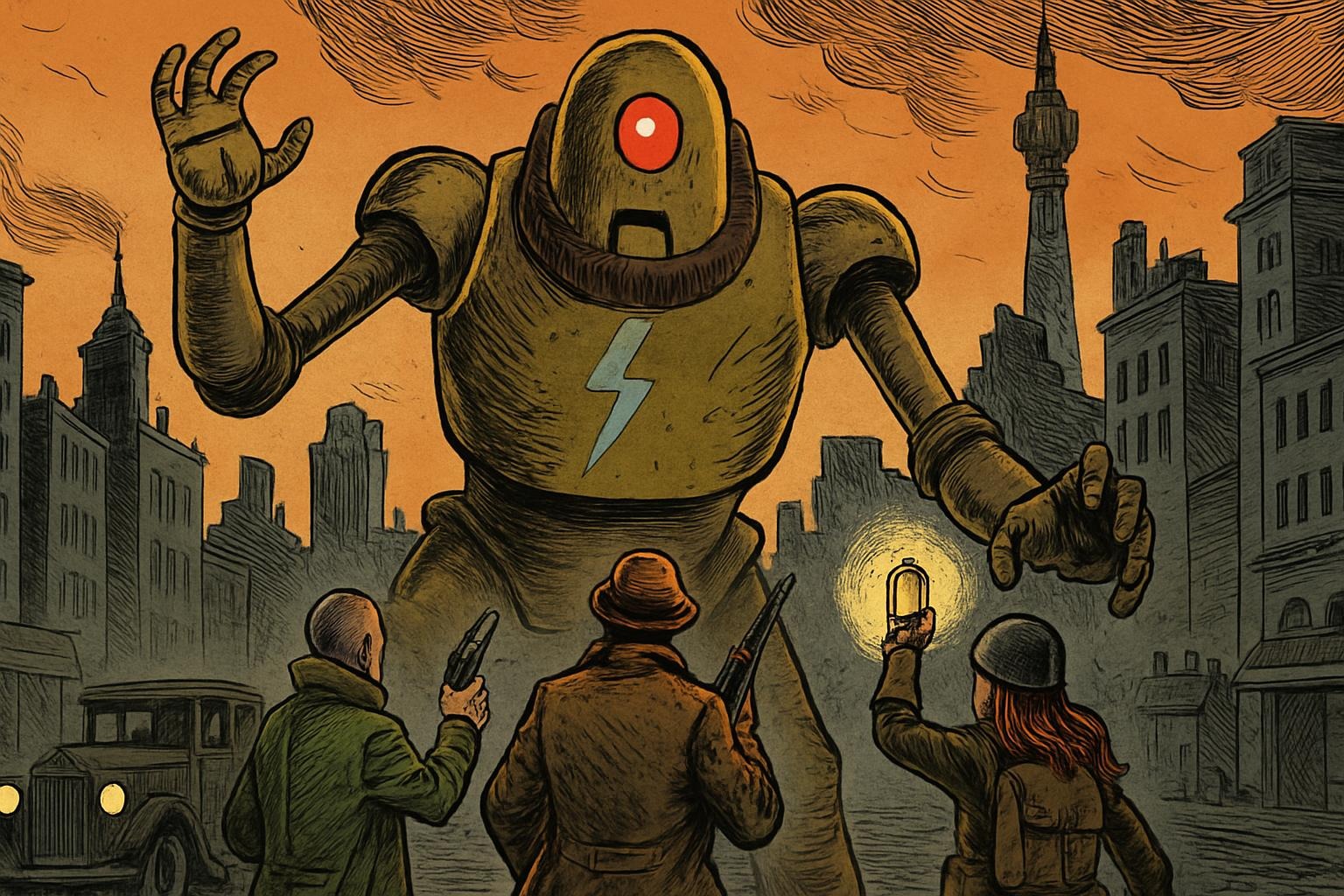
Electric Bastionland is a triumph of style, tone, and design minimalism. It takes the spark of Into the Odd and amplifies it into a full city full of strange corners, moral mistakes, weird treasures, and oppressive debts. It is both terrifying and magically weird.
For tabletop groups who want something atmospheric, strange, and immediate; who want to tell odd stories, explore weird alleys, risk everything for treasure; who want the rules to assist but not bury the story—this is right in their wheelhouse.
If you can accept—or embrace—risk, ambiguity, and the need for improvisation, Electric Bastionland is not just worth playing, it’s worth owning.