
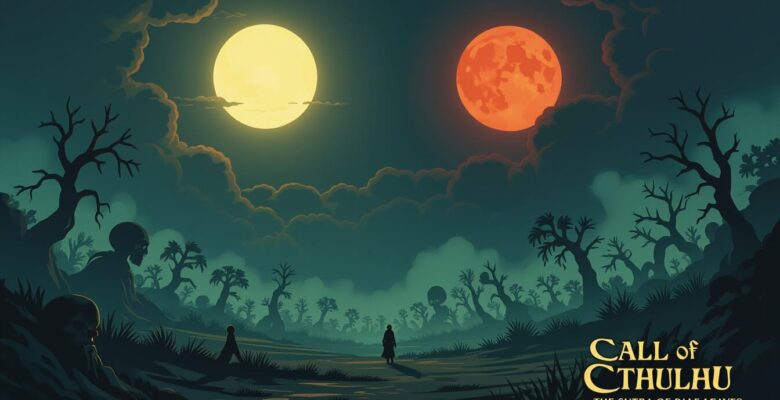
The Sutra of Pale Leaves: Twin Suns Rising is a major new campaign book for Call of Cthulhu that transplants the Mythos into 1980s Japan, centering on the resurfacing of an occult text—the Sutra of Pale Leaves—and the dread patron known as the King in Yellow (here styled as the Prince of Pale Leaves). The hardcover was released in June 2025 and includes three full scenarios, a detailed cultural and setting primer, new Mythos entities, and mechanical material to use the Sutra and its cults in your Keeper’s campaigns. Chaosium published the book with full art and layout support; preorders include instant PDF access.
⚙️ What’s inside — structure & key contents
Cthulhu Twin Suns Rising is built to be both playable as discrete scenarios and linkable into a longer campaign arc. The core elements are:
- Three scenarios — Dream Eater, The Pallid Masks of Tokyo, and a third linked adventure; each can stand alone or be strung together to escalate from local mysteries to transnational threat.
- Setting material — a detailed look at Japan in the 1980s: the friction between tradition and rapid modernization, the role of corporate and criminal organizations (including yakuza), and the social landscapes that cults exploit. This situates the Mythos organically in period detail.
- The Sutra & the Yellow King — a comprehensive guide to the Sutra’s in-game effects, how exposure alters investigators and NPCs, cult structure, and mechanical hooks for using the book as a campaign engine rather than merely a MacGuffin.
- New Mythos creatures & tools — an array of fresh monsters and encounter options tailored to the setting’s themes (sleep-related horrors, faceless assailants, cultic phenomena) that Keespers can drop into modern or period games.
The book’s production notes and previews emphasize its dual nature: cinematic one-shots or an extended campaign when paired with the follow-up volume Carcosa Manifest.
🎭 Play experience & tone
Chaosium has leaned into a particular tonal fusion here: nocturnal urban horror plus the literary dread of the King in Yellow. The 1980s setting is not mere window-dressing—economic excess, generational alienation, and spiritual marketplaces (from self-help to sects) drive the human side of the horror. That gives the scenarios an eerie plausibility: the Sutra doesn’t simply summon monsters; it takes advantage of social stresses and pre-existing anxieties. The result is a campaign that feels culturally specific while remaining recognizably Mythos in its escalation from uncanny incident to existential dread.
Mechanically, Twin Suns Rising provides robust guidance for staging investigative sequences (clue trees, NPC motivations) and for handling the Sutra’s corrosive influence on sanity and society. Community readers and early reports note that the book’s scenario chapters use flowcharts and clearer clue-mapping to reduce keeper prep time and improve pacing—an iterative refinement of Chaosium’s scenario design practices.
✨ Strengths — why Cthulhu Twin Suns Rising stands out
- Setting as engine: The 1980s Japan portrait is thoroughly researched and evocative; modernity vs. tradition becomes a thematic engine that the Sutra exploits, which helps the Mythos feel freshly relevant.
- Playable modularity: Each scenario works as a stand-alone mystery or as part of a longer arc (especially now that Carcosa Manifest is available to extend the campaign). That flexibility suits keepers who want one-offs or multi-session campaigns.
- New, usable Mythos elements: The book doesn’t just transplant existing lore; it offers monsters, cult structures, and artifacts keyed to the setting’s themes, making it straightforward to reuse material in other contexts.
- Improved scenario ergonomics: Reviewers have praised the clearer clue maps and flowcharts, which reduce late-night keeper fumbling and help maintain investigative momentum.
⚠ Caveats & things to watch
- Tone sensitivity: The 1980s Japan setting involves cultural specifics and depictions of real social issues; keepers should be attentive to tone and respectful handling of topics such as organized crime, social dislocation, and spiritual traditions. Proper content-warnings and collaborative table discussion are advisable.
- Ratcheting escalation: The King in Yellow mythos is, by design, existential. For groups preferring low-body-count, slow-burn mysteries, the Sutra’s influence can accelerate into cosmic horror that some players find overwhelming; calibration is necessary.
🗡 Final verdict
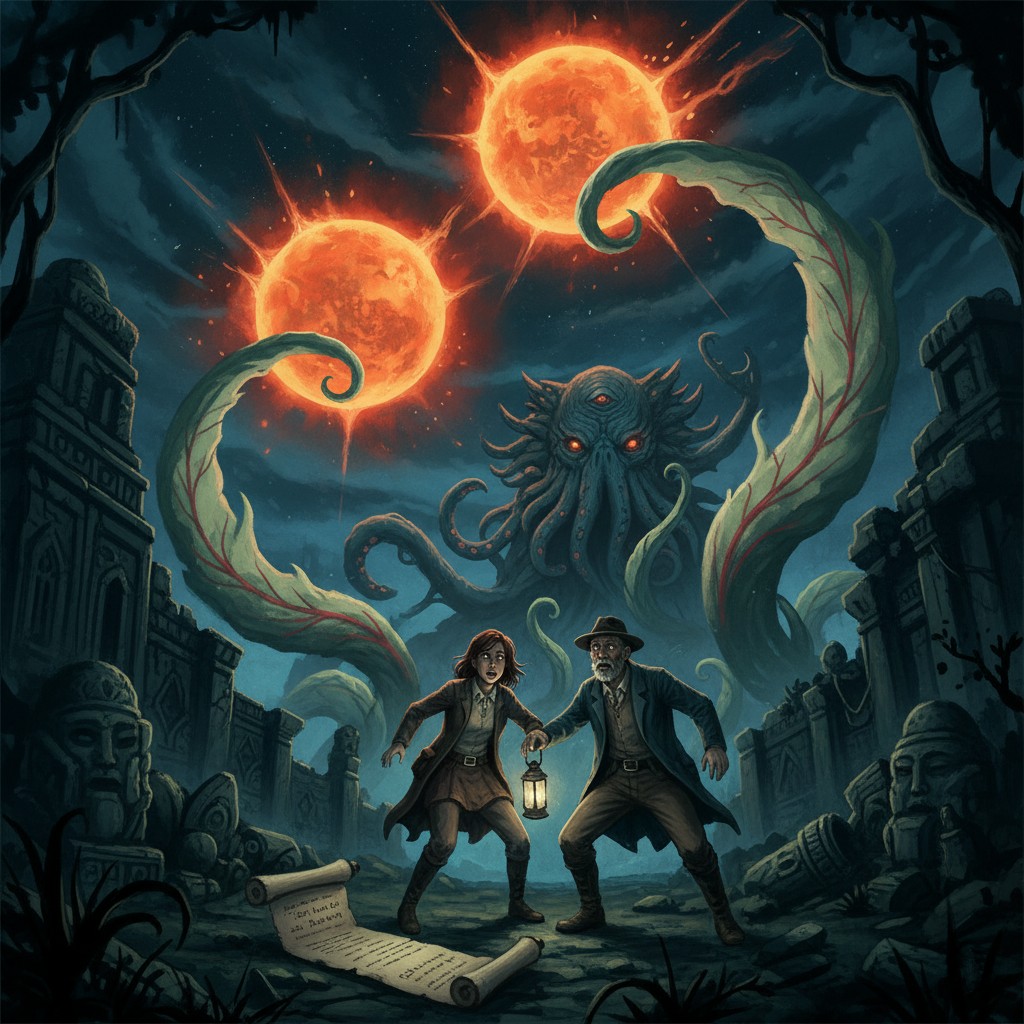
The Sutra of Pale Leaves: Twin Suns Rising is a confident, well-produced addition to Call of Cthulhu’s modern-era offerings. By marrying a specific historical moment (1980s Japan) to the corrosive, theatrical menace of the King in Yellow, Chaosium gives keepers both a culturally immersive sandbox and a durable Mythos engine. The scenarios are versatile, the setting material is functional and evocative, and the new Mythos tools are readily reusable.
Whether you run it as a set of chilling one-shots or as the first act of a sweeping Carcosan campaign, Twin Suns Rising supplies the raw materials—and the careful keeper guidance—to make investigations sing and dread accumulate. If you value setting-rich scenarios and don’t mind running toward existential horror, this volume is a strong, playable entry in the modern Call canon.